

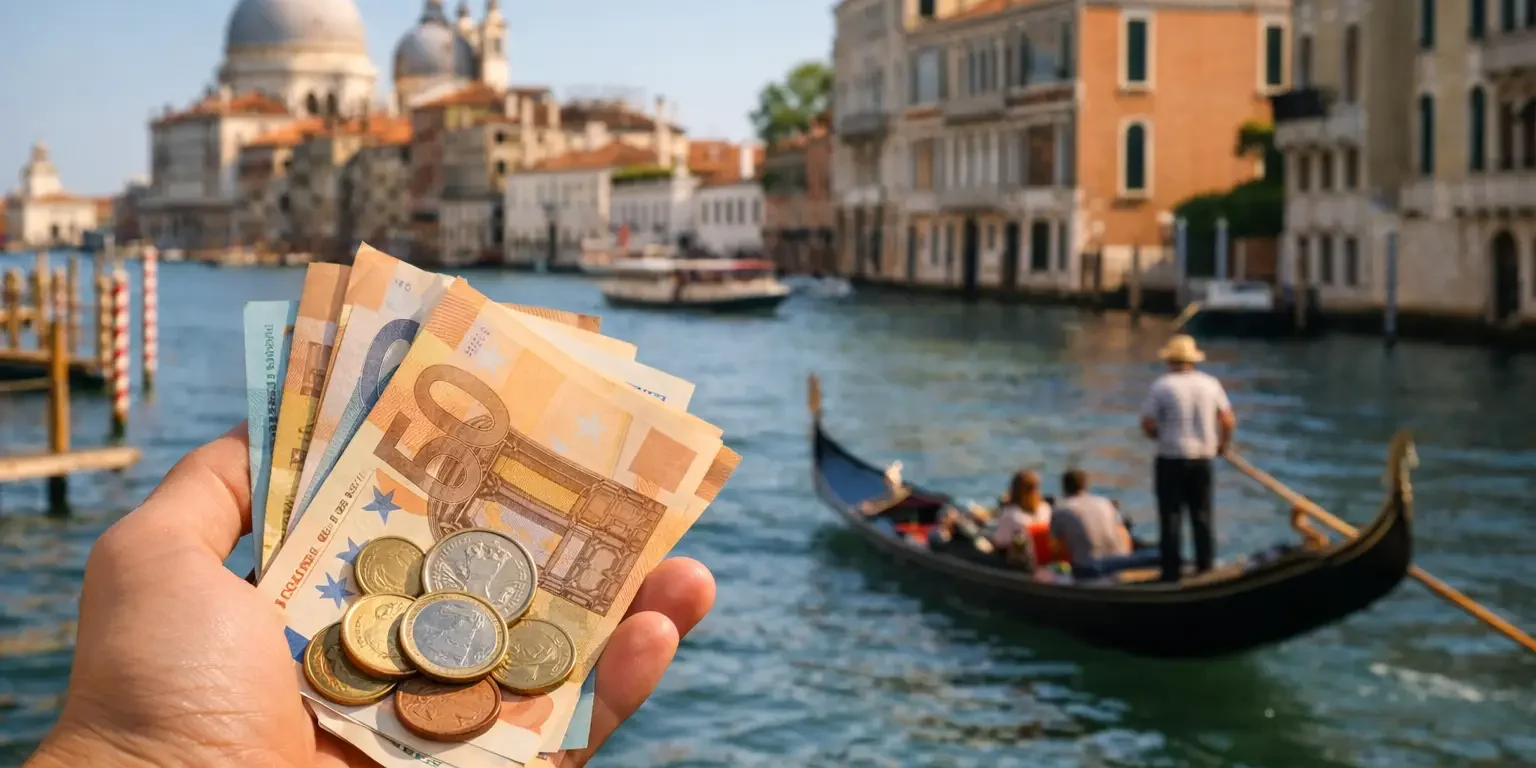
You may land in Venice with a premium card, a phone wallet, and every intention of traveling cash-light – then find yourself pausing at a waterside café, a small artisan shop, or a vaporetto stop and wondering how much cash do you need in Venice? The reassuring answer is usually less than visitors expect, but more than zero. Venice is well equipped for card payments, yet a modest amount of euros still makes the experience smoother, especially when you want the freedom to move through the city gracefully rather than stopping to search for an ATM.
How much cash do you need in Venice for a typical stay?
For most travelers, carrying 50 to 150 euros in cash at a time is entirely sufficient. That is not a daily spending target. It is a comfortable working amount that covers incidental purchases, small cafés, quick snacks, a gondola share if agreed in cash, gratuities when appropriate, and those moments when a card terminal is unavailable or simply inconvenient.
If your stay is centered on elegant accommodations, restaurant reservations, and pre-booked experiences, your larger expenses will almost always be paid by card. In that setting, cash becomes a practical backup rather than the foundation of your budget. Many guests discover they use less cash in Venice than they would in smaller Italian towns, especially when staying near San Marco, where most established businesses cater to international visitors and accept major cards.
A useful rule is simple: arrive with enough euros to cover your first several hours comfortably, then adjust only if you notice you are reaching for cash more often than expected.
Where cash is still useful in Venice
Venice is not a cash-only city, but it is still a city of small rituals and human-scale transactions. That is where cash remains relevant.
At cafés and bars, especially if you are stopping for a quick espresso or a simple counter service order, paying in cash can feel easier. The same applies to a pastry, bottled water, or a late afternoon spritz in a less formal setting. Small artisan boutiques may accept cards, but some visitors still prefer cash for lower-value purchases.
Water taxis, porters, or luggage assistance are another area where cash can be useful. Even when a service accepts cards, gratuities are often easier to handle in euros. Public transportation tickets are widely available through machines and card-friendly points of sale, but if you are making spontaneous purchases, having a few small notes and coins avoids friction.
Church donations, market purchases, and minor neighborhood transactions also fall into this category. None of these are likely to define your budget, yet together they explain why carrying a modest reserve is wise.
How much cash do you need in Venice per day?
The honest answer is that it depends on your style of travel. A guest who enjoys long lunches, reserved dining, and planned museum visits may use almost no cash in a day. Someone who prefers to wander, stop often, and make small casual purchases may use 20 to 40 euros without trying.
For a refined but realistic estimate, 20 to 30 euros per person, per day in potential cash spending is usually more than enough for incidental expenses. That might include coffee, gelato, a quick bite, a small gratuity, and one or two low-cost purchases.
If you are staying for three to four days, bringing or withdrawing around 100 euros per person is generally comfortable. Not because you will necessarily spend it all, but because Venice is best enjoyed without keeping mental accounts of every espresso and every short stop. The city invites spontaneity, and a small amount of cash supports that sense of ease.
What you will probably pay by card instead
Hotels, luxury apartments, most restaurants, museum tickets, private tours, and major retail purchases are typically handled by card. In fact, many travelers find that once they settle into their stay, cash is used mainly for convenience rather than necessity.
This is especially true if your accommodations are designed around comfort and independence. Guests staying in a well-appointed apartment in central Venice often shop selectively, dine intentionally, and organize transport in advance. That naturally reduces the need for large amounts of cash. A thoughtfully located residence near San Marco allows you to move around the city with less logistical stress, which also means fewer rushed purchases and fewer situations where cash becomes your only option.
If your spending style leans toward private comfort and curated experiences, your card will do most of the work.
Should you bring cash to Venice from home?
Bringing a small amount of euros from home can be convenient, particularly after a long international flight. Enough for airport transit, coffee, or an immediate incidental purchase is sensible. There is no strong reason, however, to arrive carrying a large sum.
ATMs are available in Venice, although it is always better to use bank-affiliated machines and avoid unnecessary withdrawal fees. Withdrawing once or twice in moderate amounts is usually smarter than arriving with excessive cash or making repeated small withdrawals.
For US travelers, this also reduces the chance of ending the trip with unused euros. Venice rewards thoughtful planning, and cash is part of that planning – but only in proportion to genuine need.
The difference between cash needs and budget needs
One common mistake is confusing spending budget with cash requirement. Venice can be as relaxed or as indulgent as you choose. Your overall travel budget may be substantial, especially if you are selecting exceptional accommodations, private transport, fine dining, or bespoke cultural experiences. That does not mean you need to carry a thick wallet.
In practice, high-value travel in Venice often involves less cash, not more. The more your trip is arranged around quality and service, the more likely it is that payments are settled digitally or in advance. Cash remains relevant mainly at the margins – the charming, unplanned moments that make the city feel personal.
That is part of Venice’s appeal. It is a city of beauty and ceremony, but also of neighborhood rhythms, tucked-away counters, local shops, and small courtesies. A little cash supports those experiences without requiring you to travel heavily burdened.
How much cash do you need in Venice for different travel styles?
If you are visiting Venice for a romantic long weekend, 100 to 150 euros per couple is usually ample for incidental spending. If most meals, transfers, and experiences are booked thoughtfully, you may return home with some of it untouched.
If you prefer spontaneous snacking, market browsing, and frequent café stops, 150 to 200 euros for two people over several days offers more flexibility. Not because every venue requires cash, but because the city feels easier when small pleasures do not require a second thought.
For a longer stay, you still do not need to carry large sums at once. It is better to keep a modest amount on hand and replenish only if needed. Venice is a place to travel lightly, both practically and mentally.
Smart ways to carry and use cash in Venice
Smaller denominations are far more useful than large notes. A handful of 5, 10, and 20 euro bills is more practical than relying on 50s. Coins are worth keeping as well, particularly for quick purchases.
It is also wise to separate your cash rather than keeping everything in one wallet. Carry what you are likely to use that day and leave the rest secured in your accommodation. This is not about alarm – Venice is accustomed to international visitors – but about traveling with the calm efficiency that luxury travel should offer.
And if you are choosing where to stay, this is one of those details that matters more than it first appears. A beautifully managed address in the heart of Venice, such as Ca’ Sant’Angelo, makes daily logistics simpler. When service is attentive and the location is central, your need for emergency cash solutions tends to shrink.
A comfortable cash amount for Venice
For most visitors, the sweet spot is clear: bring or withdraw enough euros to feel at ease, not enough to feel responsible for it. Around 100 euros per person for a short stay, or 150 euros per couple for incidental expenses, is typically a very comfortable range. Add more only if you know you prefer cash or expect many informal purchases.
Venice is best experienced with confidence, not overpreparation. A little cash gives you freedom. The rest of your attention belongs where it should be – on quiet canals, beautiful interiors, and the rare pleasure of living in the city, even briefly, as though you truly belong there.