

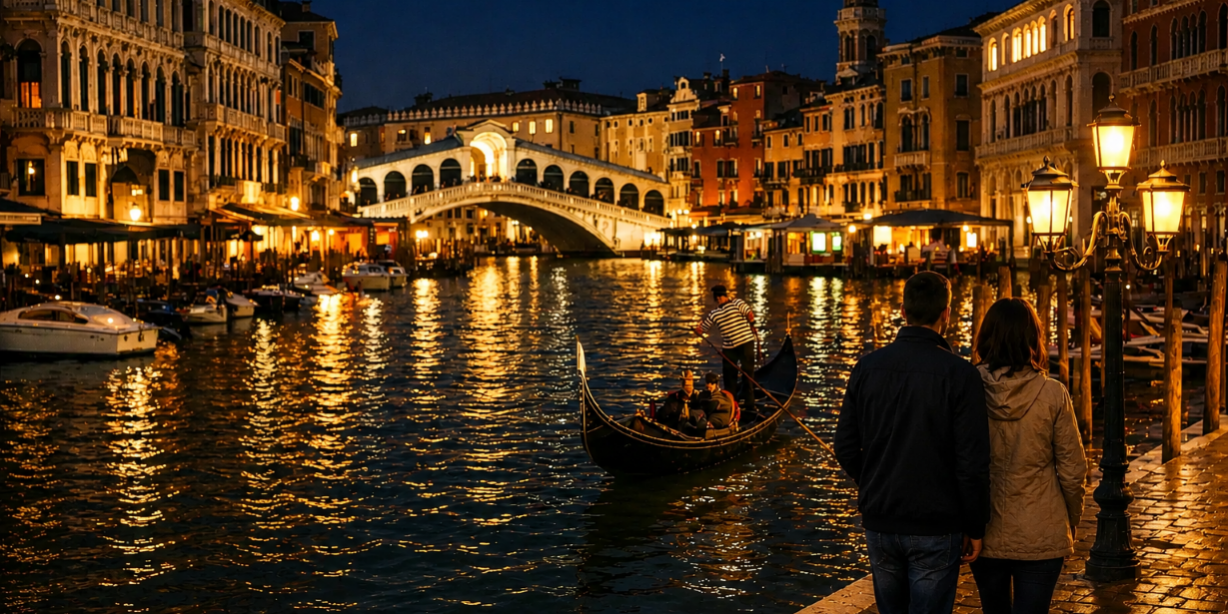
Few cities feel as cinematic after dark as Venice. The crowds thin, the canals turn still, and even familiar streets around San Marco seem softer and more intimate. So, is Venice safe at night? In most cases, yes – especially compared with many major international cities – but the smartest answer is a little more nuanced than a simple yes or no.
Venice is generally considered a safe destination for evening strolls, late dinners, and unhurried walks back to your apartment. Violent crime is uncommon in the historic center, and much of the city remains lively into the evening, particularly around well-known areas. What matters more is understanding the character of Venice at night: its quiet lanes, occasional confusion over directions, and the small practical habits that make any nighttime outing feel easier.
Is Venice safe at night for visitors?
For most visitors, Venice feels calm rather than threatening after sunset. The city center is walkable, car-free, and filled with people lingering over dinner, returning from concerts, or crossing bridges on their way home. In areas such as San Marco, Rialto, and parts of Dorsoduro, there is often enough evening activity to make a late walk feel comfortable, especially during the main travel seasons.
That said, safe does not mean carefree in every sense. Venice is still a city, and cities reward awareness. Petty theft can happen, particularly in crowded places during the day and around transit points. At night, the bigger issue for many travelers is not crime but disorientation. A peaceful alley can suddenly feel deserted if you are unsure where you are, and a wrong turn can add several bridges and ten quiet minutes to what looked like a short route.
This is where location shapes the experience. Staying in a well-positioned central neighborhood often makes evenings feel simpler and more relaxed. When your apartment is close to major landmarks but set within a refined residential setting, you can enjoy Venice after dark without turning the journey home into an expedition.
What Venice feels like after dark
Venice does not behave like cities built around nightlife districts, traffic, and neon-lit boulevards. After dinner, it becomes quieter in a very particular way. Restaurants stay active, hotel entrances remain illuminated, and vaporetti continue to run, but many side streets empty out quickly. That atmosphere can feel romantic to some visitors and slightly unnerving to others, especially on a first trip.
The key is to recognize that silence in Venice is normal. A dimly lit calle with no one in sight is not automatically a warning sign. Often, it is simply Venice being Venice – residential, low-lit, and tranquil. If you are accustomed to busy urban evenings, the stillness may take a moment to adjust to.
The city also changes with the seasons. In summer, public spaces remain active later, and the evening energy lasts longer. In winter, darkness falls earlier and streets can feel much emptier, although not necessarily less safe. Rain, fog, or acqua alta can also make movement slower and reduce visibility, which is worth considering if you plan to be out late.
The areas that usually feel most comfortable
For first-time visitors, central Venice tends to feel the easiest to navigate after dark. San Marco remains one of the most convenient areas for evening outings because it combines prestige, proximity to landmarks, and a steady flow of visitors and residents. Around Rialto, there is usually enough foot traffic to keep the atmosphere relaxed well into the evening. Dorsoduro, especially near popular dining areas, can also feel pleasant and sociable.
Castello and Cannaregio vary more block by block. Parts are lively and local, while others become notably quiet at night. They are not inherently unsafe, but they may feel more isolated if you are unfamiliar with the area. Santa Croce and areas near the train station can be practical for arrivals and departures, yet transit zones in any city tend to deserve a little more caution, particularly if you are carrying luggage or looking at your phone while trying to orient yourself.
For travelers who value both atmosphere and reassurance, the ideal balance is often a central address in a distinguished neighborhood. That gives you the freedom to enjoy an evening aperitivo, a concert, or a moonlit walk without worrying about a long or confusing return.
Common risks are usually minor, but worth knowing
In Venice, the most realistic concerns at night are usually practical rather than dramatic. Pickpocketing is more associated with crowded daytime settings, but it can still happen in busy evening areas. Keep valuables secure, avoid placing your phone or wallet loosely in an outer pocket, and be discreet with luxury accessories in packed public spaces.
The second risk is simply getting lost. GPS can be inconsistent in Venice’s narrow lanes, and directions that seem obvious on a map may be less clear on foot. Bridges, dead ends, and twisting passageways can create detours, especially at night when visual landmarks are less distinct. If you tend to rely entirely on your phone, Venice will teach you to pay closer attention.
A third issue is water. This is not danger in the dramatic sense, but canals, worn stone steps, and damp surfaces deserve care after dark. Walk steadily, wear appropriate footwear, and take extra caution on bridges if it has rained. Venice rewards elegance, but it is not always kind to impractical shoes.
Smart ways to enjoy Venice confidently at night
A little preparation goes a long way in Venice. If you are heading out for dinner or an evening performance, it is worth noting your route before you leave rather than assuming the return will be obvious. Taking a screenshot of directions, identifying a nearby landmark, or remembering the name of the closest vaporetto stop can make the journey back feel much more effortless.
It also helps to keep your evening plans in harmony with the city. Venice is best enjoyed at a graceful pace. Instead of crossing half the city late at night, choose experiences within comfortable reach of where you are staying. That gives you more time to enjoy the atmosphere and less chance of turning the evening into a navigation exercise.
If you are traveling as a couple, with friends, or as a family, stay together in quieter stretches and keep distractions to a minimum while walking. If you are alone, favor well-traveled routes and avoid wandering aimlessly just for the sake of exploration after midnight. Romantic spontaneity is lovely in Venice, but a little structure makes it even better.
Is Venice safe at night compared with other Italian cities?
Many visitors find Venice feels safer at night than larger Italian cities because of its scale, its pedestrian layout, and the absence of road traffic in the historic center. There is less of the urban pressure that can come with large stations, heavy nightlife corridors, or fast-moving city traffic. The pace is slower, and that alone can make an evening feel more manageable.
Still, Venice presents its own trade-off. In a larger city, you may have brighter streets and more obvious transport options. In Venice, you get a more intimate setting, but also more silence, fewer visual cues, and routes that can be confusing. So the comparison is favorable overall, yet the experience is different enough that travelers should adjust their expectations.
Why your accommodation choice matters
Where you stay has a direct effect on how Venice feels after dark. A central, beautifully maintained residence in San Marco offers more than prestige. It offers ease. You can step out for dinner, enjoy the city in its most enchanting hours, and return through elegant surroundings without a long, uncertain walk.
This is one reason discerning travelers often prefer a private apartment with attentive guest support over a more anonymous setup. Comfort at night is not only about thread count or design, but also about confidence. Knowing you are in a refined location, with responsive assistance if needed, changes the tone of an entire stay. At Ca’ Sant’Angelo, that sense of calm is part of the experience – the pleasure of living in Venice beautifully, with the city close at hand and practical support in place.
Venice at night is not something to avoid. It is something to enjoy intelligently. The city’s quiet beauty is one of its greatest luxuries, and with a central base, good awareness, and an unhurried approach, the evening hours often become the moments visitors remember most fondly. If you allow Venice to set the pace, it usually rewards you with exactly the kind of night you hoped to find.