

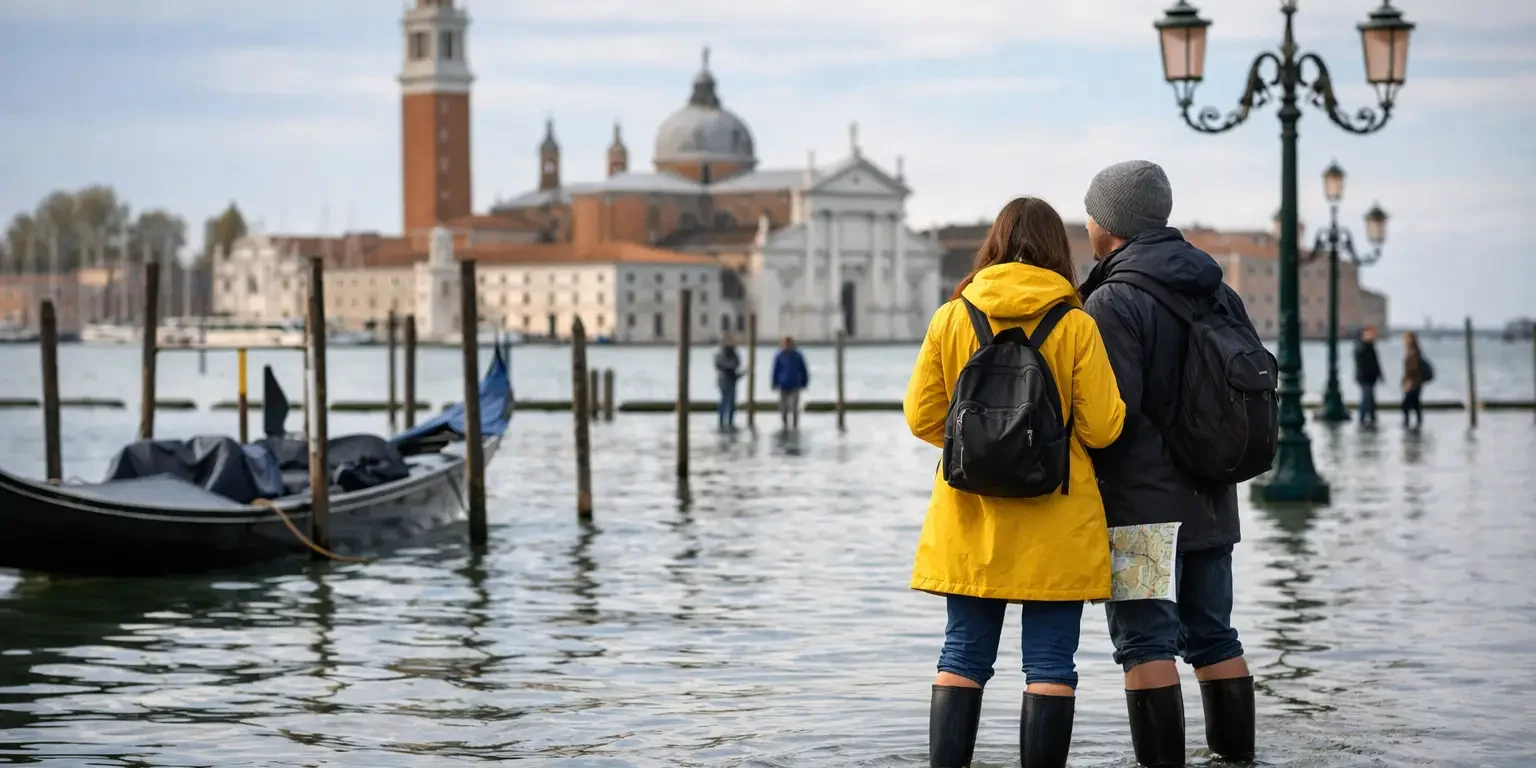
You step out for an early espresso, hear the soft knock of water against stone, and notice a narrow walkway has appeared across the square. That is often a visitor’s first real encounter with acqua alta, and it is exactly why a Venice high water guide matters. In Venice, high water is not a travel disaster. More often, it is a manageable part of life in the city – especially when you understand what is happening and choose your accommodations wisely.
Acqua alta simply means exceptionally high tides that temporarily raise water levels in parts of Venice. It tends to affect the lowest-lying areas first, with St. Mark’s Square often among the most visible. For travelers staying in central Venice, especially near San Marco, the key is not to avoid the city in fear of high water. It is to arrive prepared, stay informed, and enjoy Venice with the calm confidence of someone who knows how the city works.
What acqua alta really means in Venice
A useful Venice high water guide begins with context. High water is caused by a combination of astronomical tides, weather patterns, and wind conditions that push water into the lagoon. It is most common from fall through winter, although timing and intensity vary from year to year.
The phrase can sound dramatic, but the reality is often less disruptive than first-time visitors expect. Many events are modest, short-lived, and highly localized. You may find one route damp, another perfectly passable, and a café carrying on as usual just a few minutes away. Venice has adapted to these rhythms for centuries, and visitors can do the same with a little planning.
That said, there is a difference between mild inconvenience and a truly high tide event. Some days require only waterproof shoes and a slight route change. Others may call for more patience, especially in the lowest zones and at peak tide. Knowing that range helps set realistic expectations.
When high water is most likely
If you are planning a trip between October and January, it is sensible to keep acqua alta in mind. This does not mean Venice is somehow off-limits during these months. On the contrary, this season can be one of the city’s most atmospheric, with quieter mornings, elegant mist over the canals, and a more intimate pace.
High tides often occur in cycles and can be forecast in advance. They also tend to peak for limited windows rather than all day long. A morning high tide may leave the city largely normal by late breakfast, while an evening event can pass before the next day’s sightseeing begins.
For travelers who value beauty, comfort, and a more authentic sense of the city, these months still hold enormous appeal. The practical question is not whether Venice changes with the tides. It does. The better question is whether your plans and accommodations allow you to move through those changes with ease.
How to prepare without overpacking
The best approach is measured, not alarmist. You do not need expedition gear for a Venice stay. You need a few thoughtful choices.
Water-resistant footwear is the single most useful item. Stylish leather soles and delicate sneakers are not ideal if high water is in the forecast. A pair of polished ankle boots with good grip will serve many travelers well. If forecasts suggest more significant flooding, lightweight waterproof overshoes or packable rain boots can be worth bringing.
A compact umbrella and a coat with some weather protection are also wise during the cooler months, when wind and rain can accompany tidal changes. Hemlines matter more than many people expect. Long trousers or coats that drag near the ground can quickly become inconvenient on wet walkways.
Beyond that, keep perspective. Venice remains a sophisticated city, not an outdoor survival course. Pack for elegant urban travel with one eye on practical footwear, and you will likely be well prepared.
Getting around during high water
Venice is surprisingly adaptable during acqua alta. Raised walkways are often installed along heavily used routes, particularly in the most affected areas. These temporary platforms help residents and visitors continue moving through the city with relative comfort, though they can become crowded at busy times.
Patience is useful here. Walking in Venice is always part navigation, part discovery, and high water adds one more layer. You may need to take a different calle, pause to let others pass on a raised platform, or allow extra time before a reservation. None of this has to diminish the pleasure of being in Venice. In many cases, it simply slows the day into a more local rhythm.
Public transportation usually continues, though conditions can affect certain stops or routes. Water taxis and vaporetto services may adjust according to tide levels and weather. If you have a fixed plan – a museum entry, a private tour, a dinner reservation – it is wise to leave earlier than usual.
Why where you stay matters most
This is where a high water plan becomes less about weather and more about quality of stay. In Venice, location is always important, but during acqua alta, location combined with thoughtful hospitality becomes invaluable.
A well-positioned residence in central Venice allows you to remain close to major landmarks while reducing the stress of long crossings through the busiest zones. Just as important is staying somewhere that offers comfort beyond a standard room. When weather shifts or tides temporarily alter your plans, space matters. Privacy matters. The ability to pause in an elegant living area, prepare a coffee, reset your schedule, or wait out the peak of the tide in complete comfort is a very different experience from feeling confined.
This is one reason discerning travelers often prefer a refined serviced apartment over conventional accommodations. The city feels more livable and far less transactional. In a place such as Ca’ Sant’Angelo, set in the San Marco district, that sense of reassurance comes from both the address and the style of stay – historic Venetian character, modern comforts, and responsive guest support when local conditions require practical advice.
What to expect in San Marco
San Marco is one of Venice’s most sought-after neighborhoods for good reason. It places you close to iconic landmarks, beautiful architecture, and some of the city’s most memorable promenades. It is also among the areas travelers most associate with acqua alta because St. Mark’s Square is notably low-lying.
That visibility can make high water in Venice seem more dramatic than it is across the city as a whole. If you see photographs of water gathering in the square, remember that conditions can differ considerably even within a short walk. Some nearby streets may remain passable with little difficulty, while the square itself becomes the image everyone remembers.
For guests staying in San Marco, the advantage is proximity. You are already in the heart of Venice. That means fewer long transfers, less dependence on crossing the city under changing conditions, and more freedom to shape the day around the tide schedule rather than against it.
A calmer way to plan each day
The most seasoned Venice travelers do one simple thing during high water season: they organize lightly. Instead of building a rigid day with no room for adjustment, they allow a little flexibility around morning and evening movements.
If a higher tide is forecast early, it may be the perfect morning for a slower breakfast and a later start. If conditions look clearer first thing, begin with your outdoor walk and save museums, shopping, or a long lunch for later. Venice rewards this kind of intuitive pacing.
It also helps to think in neighborhoods rather than rushing back and forth. Spend a morning deeply in one area. Linger. Notice details. Return comfortably rather than trying to check off too much. High water does not have to reduce a trip’s richness. Often, it improves it by encouraging a more elegant tempo.
Should high water change your decision to visit?
For most luxury travelers, the answer is no – not if expectations are informed. If your priority is flawless predictability at every moment, summer may feel easier. If your priority is atmosphere, beauty, and the chance to experience Venice with greater intimacy, high water season can be deeply rewarding.
There are trade-offs. You may need more practical footwear, a touch more flexibility, and a willingness to adapt your route. In return, you may find quieter streets, dramatic skies, reflective canals, and a city that feels less performed and more real.
That is the heart of any good Venice high water guide. Acqua alta is not simply a condition to manage. It is part of the lagoon city’s character, one more reminder that Venice has always lived in conversation with the water around it. Come prepared, stay somewhere that makes comfort effortless, and you are free to enjoy the enchanted city with exactly the kind of ease it deserves.
The loveliest Venice trips are rarely the ones that go exactly as scripted. They are the ones where the city reveals its character, and you are comfortable enough to enjoy it.