

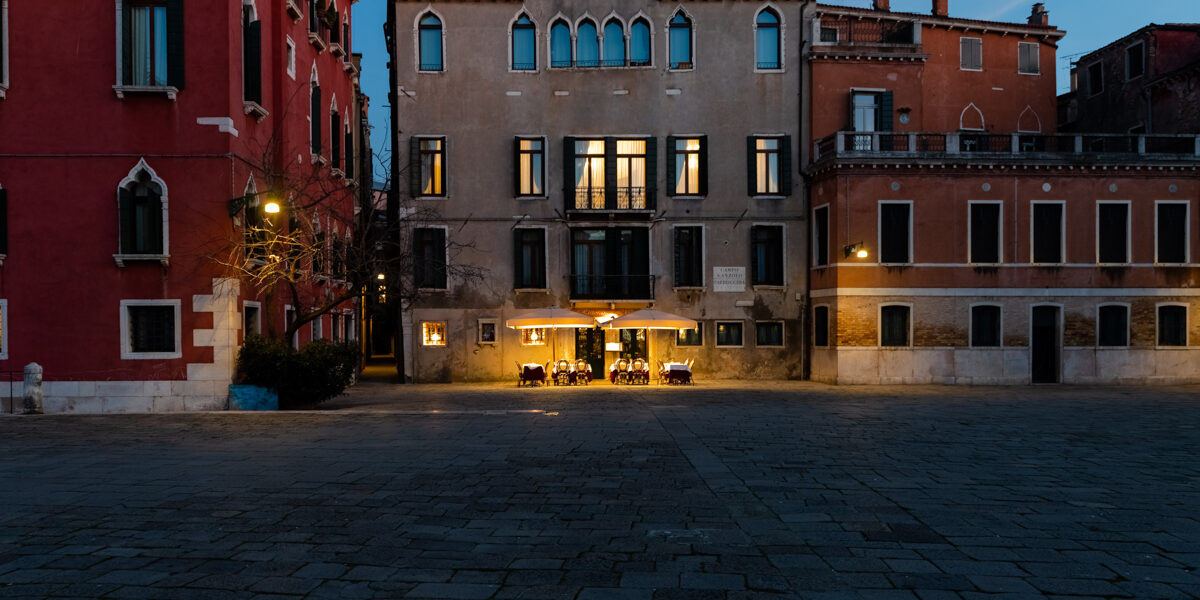
A historic palazzo stay guide should begin with a distinction that matters in Venice: heritage is not simply a decorative backdrop. In a true palazzo, the proportions, light, materials, and sense of arrival can shape every hour of your visit. Choosing well means finding a residence that preserves this character while offering the practical ease that lets you enjoy the enchanted city on your own terms.
For travelers who prefer privacy to a conventional hotel routine, a carefully restored apartment in a noble Venetian building offers a particularly rewarding way to stay. You can return from an evening at La Fenice or a quiet walk along the canals to rooms that feel considered, private, and unmistakably Venetian, rather than merely convenient.
What Makes a Palazzo Stay Different
Venetian palazzi were built for a city unlike any other. Their façades may appear discreet from a narrow calle or a canal, yet beyond the entrance lie grand staircases, lofty ceilings, terrazzo floors, tall windows, and rooms designed to receive light from the water and sky. A stay in one of these buildings offers a sense of place that cannot be reproduced by a newly built hotel.
The most sought-after residences are often found on the piano nobile, traditionally the principal floor of a noble home. Elevated above the ground level, these rooms were created for the life of the household and its guests. They commonly have the most generous ceiling heights, the finest architectural details, and views that bring Venice into the apartment without placing you in the center of the crowds.
That heritage also asks for thoughtful expectations. A historic building may have a more intimate entrance than a large hotel, and access can involve stairs or a smaller elevator. These are not shortcomings when they are clearly communicated and balanced with attentive assistance. They are part of choosing an authentic residence over a standardized property.
A Historic Palazzo Stay Guide: What to Look For
The most appealing historic apartments do not force a choice between atmosphere and comfort. Restoration should respect the building’s original character while making daily life effortless. Look beyond polished photographs and consider how the space will support the rhythm of your stay.
A proper kitchen is valuable even if you intend to dine out often. Venice rewards small rituals: espresso before an early walk, fruit and pastries brought home from a nearby bakery, or an unhurried aperitivo before dinner. A kitchen with quality equipment, a dishwasher, and sufficient workspace gives you that freedom without turning your vacation into a domestic routine.
Laundry facilities are another quiet luxury, especially after a day of changing weather or a water-taxi arrival. Reliable high-speed Wi-Fi, climate control, comfortable seating, and well-designed bathrooms matter just as much. The finest historic stays feel graceful because the operational details have been anticipated.
Pay close attention to the quality of the renovation. Original terrazzo, wood beams, stucco work, or antique proportions can coexist beautifully with contemporary lighting and modern appliances. What matters is balance. An apartment overloaded with period furniture can feel more like a set than a home, while an overly minimal redesign may lose the very character you came to Venice to experience.
Location Is Part of the Experience
In Venice, location is not measured only by distance. A few minutes on foot can lead from a busy thoroughfare to a peaceful campo, and the route you take each day becomes part of the pleasure of the stay. The San Marco area remains a compelling choice for travelers who want cultural landmarks, celebrated restaurants, boutiques, and water transport close at hand while still having a refined residential base.
Being near St. Mark’s Square means you can experience it at its most atmospheric: early in the morning before the city fully wakes, or later in the evening when daytime visitors have departed. You are also well positioned for the Accademia, Rialto, the opera house, and the vaporetto connections that make a visit to the islands feel simple rather than logistical.
Still, central does not need to mean noisy. Ask where the apartment sits in relation to the busiest pedestrian routes and whether its windows face a canal, courtyard, or calle. Sound travels differently in Venice, particularly during high season. A beautifully located palazzo on a quieter lane can offer the best of both worlds: immediate access and a sense of retreat.
Service Makes Private Living Feel Effortless
An apartment stay should provide independence, not uncertainty. The difference between a good rental and an exceptional one often appears before you arrive: clear directions, useful advice about water taxis and porters, timely responses to questions, and a warm welcome that does not feel scripted.
Once in Venice, local support has real value. Restaurant reservations, guidance on the most practical route from the airport or train station, tour suggestions, and help with unexpected needs can save precious time. The service should be present when useful and discreet when it is not. You should feel free to shape your days without needing to solve every detail alone.
At Ca’ Sant’Angelo, the appeal lies in this balance: fully renovated apartments on the piano nobile of a historic palazzo, paired with personalized support and the amenities expected in a luxury residence. It is a model that suits guests who appreciate the space and autonomy of an apartment but still value the reassurance of attentive hospitality.
Plan for Venice as It Really Works
Venice rewards visitors who plan a little differently. There are no cars at the door, bridges punctuate most walking routes, and arriving with large luggage requires more thought than it would in another European city. Before booking, confirm the most suitable arrival plan and ask whether private water-taxi arrangements, porter assistance, or detailed walking directions can be provided.
Consider the timing of your days as well. Major sights are most enjoyable early or late, leaving the middle of the day for a long lunch, a gallery, or time in your apartment. A palazzo residence makes that pause feel like a pleasure rather than a compromise. You are not retreating to a generic room; you are returning to a setting with its own Venetian presence.
The same principle applies to dining. It is worthwhile to reserve a few special meals, but leave room for spontaneity. Some of Venice’s most memorable moments arrive without an itinerary: a glass of wine in a small bacaro, a quiet church encountered between appointments, or a misty view across a canal after rain.
Questions Worth Asking Before You Book
Before confirming a historic residence, ask practical questions that reveal how the stay will feel. Is the apartment fully private? Which floor is it on, and how is it accessed? Are the kitchen, laundry, Wi-Fi, and climate controls available within the apartment? What type of guest assistance is offered before and during the stay?
It is also sensible to ask about the immediate surroundings, including the closest water-taxi point and how quiet the apartment tends to be at night. If a particular architectural detail matters to you, such as canal views, high ceilings, or original terrazzo flooring, ask directly rather than assume. Venetian buildings vary wonderfully from one address to the next.
A well-managed property will answer these questions with precision, not broad promises. That clarity is a sign of care, and it lets you choose a residence that matches your travel style rather than simply its photographs.
The right palazzo stay gives Venice more room to unfold. Choose a place with genuine architectural character, intelligent comforts, and service that understands the city, then allow yourself time to live there slowly. The best memories often begin when you close the apartment door, look out at the passing light, and realize that Venice feels briefly like your own neighborhood.