

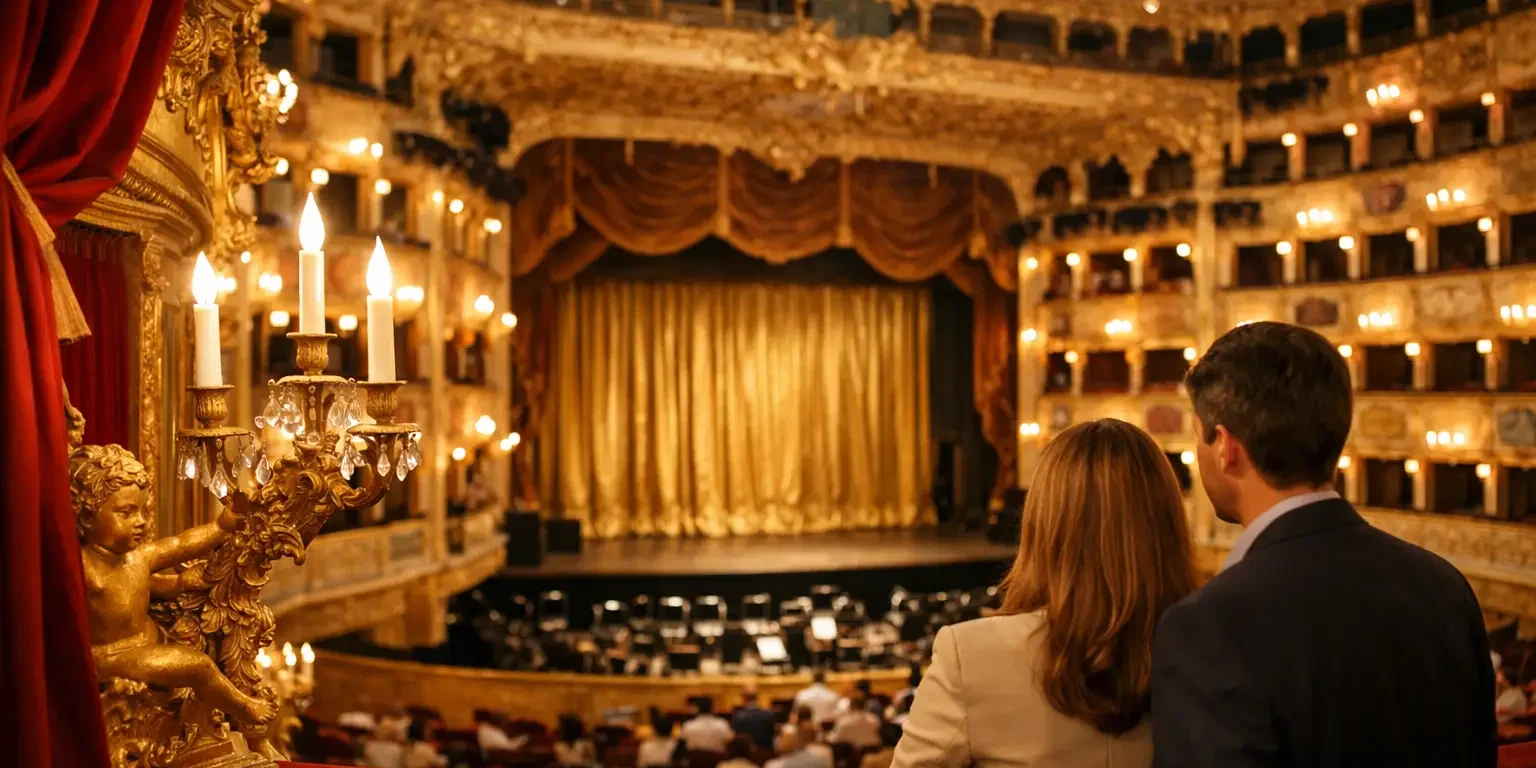
A visit to La Fenice Theatre offers something rare in Venice: an opportunity to step beyond the city’s magnificent façades and into a living cultural institution. Behind its discreet entrance near Campo San Fantin, velvet, gilt ornament, painted ceilings, and hushed corridors preserve the atmosphere of opera at its most glamorous. Whether you attend a performance or tour the theater during the day, La Fenice rewards a little advance planning.
For guests staying near San Marco, the theater is especially easy to enjoy. It is close enough to make an elegant evening feel unhurried – time for an aperitivo, a gentle walk along the canals, and a return through quieter streets after the final applause.
Why La Fenice Still Matters
La Fenice, meaning “The Phoenix,” was inaugurated in 1792 and has long been one of Italy’s defining opera houses. Its name became remarkably prophetic. The theater was rebuilt after fires in 1836 and again after the devastating 1996 fire, reopening in 2003 following a meticulous reconstruction of its historic interiors.
That history gives the building a particular emotional force. La Fenice is not simply a beautiful theater restored for visitors. It remains an active stage, where opera, ballet, symphonic concerts, and recitals continue to shape Venice’s cultural calendar.
The theater also holds a distinguished place in musical history. Works by Giuseppe Verdi, Gioachino Rossini, Vincenzo Bellini, and other major composers were premiered here. Seeing a performance in the same setting is compelling even for travelers who do not consider themselves opera devotees. The experience is as much about place, ritual, and Venetian artistry as it is about knowing every aria.
Planning Your Visit to La Fenice Theatre
There are two very different ways to experience La Fenice: a daytime visit and an evening performance. The better choice depends on how much time you have, your interest in music, and the kind of memory you hope to take home.
A daytime tour is ideal for travelers with a full sightseeing itinerary or those who want to appreciate the architecture at their own pace. The auditorium is the centerpiece, with tiers of richly decorated boxes rising around the stage. The royal box, ceiling decoration, foyers, and exhibition areas add context to the theater’s history and reconstruction.
An evening performance creates a more immersive occasion. You see the building as it was intended to be used: lights glowing in the boxes, an audience settling into place, and the orchestra gathering beneath the stage. It requires more of your schedule, but for many guests, it becomes one of the most memorable nights of a Venice stay.
Choose a performance with care
La Fenice’s program changes throughout the year. A celebrated opera may appeal to experienced listeners, while a shorter concert or ballet can be a comfortable introduction for first-time attendees. The practical consideration is timing: full operas can last several hours and may include one or more intermissions.
If you are drawn to the occasion rather than a specific composer, do not feel pressured to select the longest production. A symphonic concert or recital can offer the same exceptional setting with a lighter commitment. Conversely, if you have always wanted to experience Italian opera in Italy, Venice is an exceptionally elegant place to do it.
Reserve ahead for preferred seats
Performance availability varies by date, title, and season. For popular productions, reserving well ahead is wise, especially if you prefer seats with a direct view of the stage. The historic boxes are undeniably romantic, though they may offer a partial or angled view depending on their position.
This is one of the key trade-offs at La Fenice. A private box delivers atmosphere, intimacy, and extraordinary photographs before the performance begins, while orchestra or central seating often provides a clearer view and more balanced sound. Neither choice is universally better. It depends on whether you value the theatrical setting most or want to follow every detail on stage.
For daytime entry, advance arrangements are also advisable during busy travel periods. Opening hours can change around rehearsals, special events, and performances, so it is sensible to confirm the schedule shortly before your visit.
What to Wear for an Evening at La Fenice
Venice has a relaxed sophistication, and La Fenice reflects it. There is no need to treat every performance as a formal gala, but polished evening attire feels appropriate and adds to the pleasure of the occasion. A dress, tailored separates, a jacket, or smart shoes will fit naturally into the room.
Comfort still matters. Venice is a walking city, and the route to the theater may include uneven paving stones and bridges. Choose footwear that allows you to arrive gracefully rather than rushing through the final streets in discomfort. During cooler months, a refined coat or wrap is useful, particularly if you plan to linger outside after the performance.
For a daytime tour, elegant casual clothing is entirely suitable. The goal is simply to be comfortable while respecting a historic cultural space.
Arriving Without the Rush
The theater is tucked into the San Marco district, a short walk from many central addresses but easy to miss if you rely on a hurried sense of direction. Venice rewards leaving early. Allow extra time for bridges, narrow calli, a pause to admire an unexpected canal view, and the occasional wrong turn that becomes part of the evening.
Aim to arrive before the stated performance time rather than at it. This gives you a chance to find your seat without pressure, admire the auditorium, and settle in before the lights go down. Late entry may be restricted until a suitable pause, which can mean missing the opening moments.
Guests of Ca’ Sant’Angelo can enjoy the advantage of a central San Marco setting, with the theater close enough to make this part of Venice feel like a neighborhood rather than an appointment across town. Personalized local guidance can also make a difference when schedules, seasonal conditions, or performance logistics need a second look.
How to Make the Experience More Meaningful
You do not need expert knowledge to enjoy opera at La Fenice. Reading a brief plot summary before arriving can make the performance easier to follow, especially if the work is sung in Italian. Many productions provide surtitles, but a little familiarity with the characters and central conflict lets you spend less time decoding the story and more time absorbing the music.
If you choose a daytime visit, consider pairing it with a slower exploration of the surrounding streets. Campo San Fantin and the lanes between La Fenice, St. Mark’s Square, and the Grand Canal reveal a more intimate side of central Venice. This is an area best enjoyed without trying to check off landmarks one after another.
For an evening performance, keep dinner plans realistic. An early reservation nearby can be delightful, but leave enough time to walk to the theater calmly. Alternatively, plan a late supper afterward and let the performance set the pace for the night. Venice after dark has a different cadence: quieter waters, lit windows, and streets that feel briefly returned to residents.
A Few Practical Details Worth Knowing
The theater’s historic character comes with a few considerations. Seating can be more compact than in a modern venue, and individual boxes may involve stairs. If accessibility, mobility, or a particular seating need is relevant to your plans, make arrangements in advance rather than assuming all areas offer the same access.
Photography policies may differ between a daytime visit and a live performance. During a performance, photography and recording are generally not appropriate, both for the artists and fellow audience members. Before the curtain rises, however, take a quiet moment to look upward at the ceiling and across the gold-lined boxes. The room itself is part of the performance.
Also remember that Venice’s cultural calendar is seasonal. Carnival, major holidays, festivals, and high summer travel can affect demand throughout the city. Booking theater plans early provides more freedom to build the rest of your stay around an experience that deserves not to be rushed.
A night at La Fenice is not about adding one more famous address to an itinerary. It is about sitting in a room shaped by fire, music, and centuries of Venetian imagination – then stepping back into the enchanted city with the last notes still in the air.