

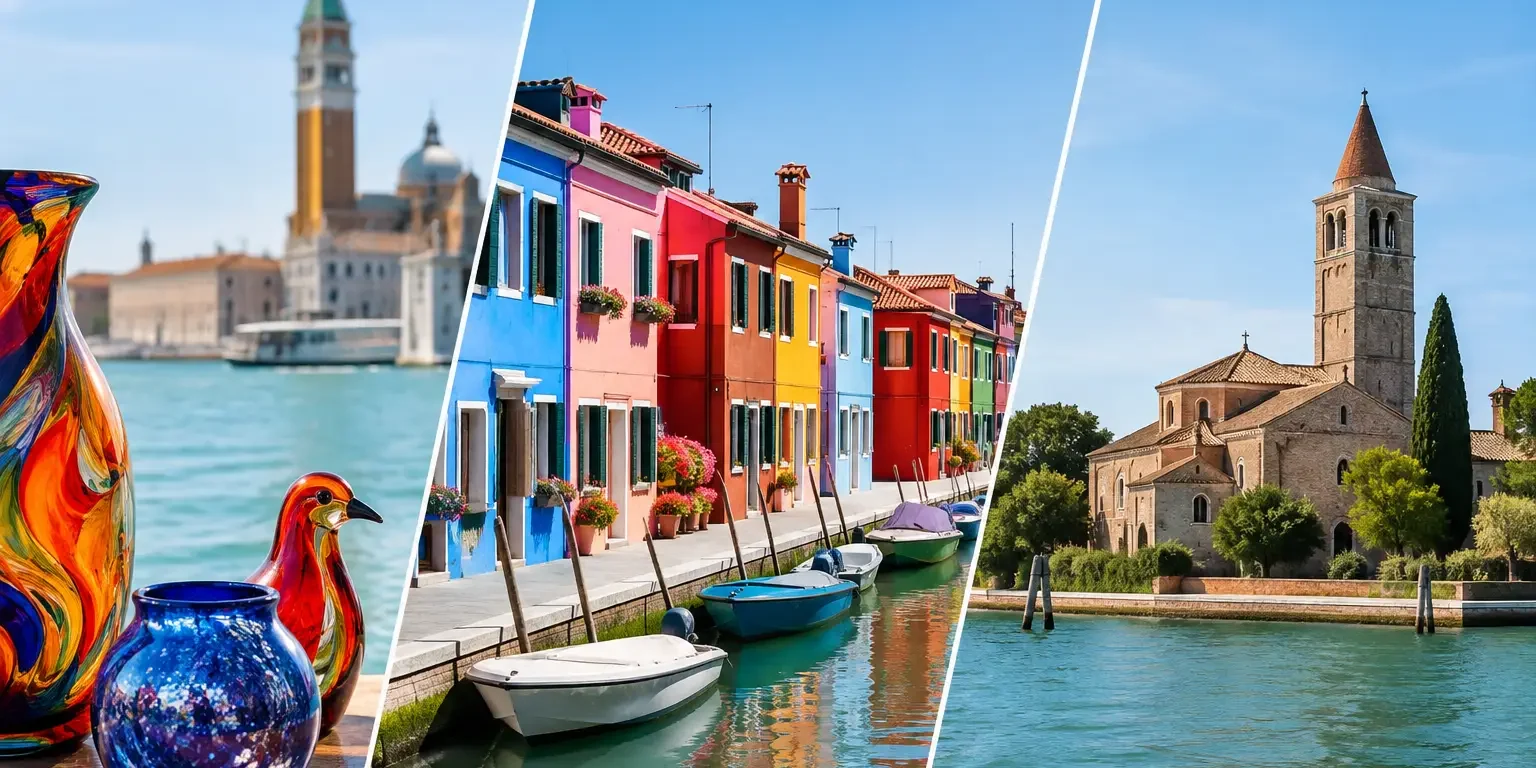
The lagoon changes the pace of a Venetian stay. Once the palaces along the Grand Canal give way to open water, the city feels quieter, wider, and wonderfully removed from the familiar bustle of San Marco. But Murano, Burano and Torcello: which is the best to visit? The honest answer is that each island offers a distinct reward, and the right choice depends on whether your day calls for artistry, atmosphere, or deep Venetian history.
For guests who value a beautifully paced itinerary, choosing one or two islands is often more satisfying than trying to see all three at speed. Venice is best appreciated with time for a waterside lunch, an unplanned turn down a quiet lane, and the pleasure of returning to the city before evening.
Murano, Burano and Torcello: Which Is Best to Visit?
Choose Murano for Venetian craftsmanship and a polished cultural visit. Choose Burano for its bright, photogenic streets and relaxed island character. Choose Torcello for stillness, early history, and a sense of the lagoon before Venice became Venice.
Murano is the easiest island to combine with time in central Venice. Burano is the most visually memorable and has the liveliest village atmosphere. Torcello is the most serene, though it asks visitors to appreciate understatement rather than spectacle.
For a first visit, Murano and Burano make a particularly rewarding pair. Torcello is best added by travelers with a full day available, a strong interest in history, or a wish to see a more contemplative corner of the lagoon.
Murano for glass, design, and Venetian craft
Murano has been synonymous with glassmaking for centuries. Venice moved many furnaces here in 1291, partly to protect the city from fire and partly to preserve the closely guarded knowledge of its master glassmakers. That history remains tangible today, from working furnaces to galleries displaying sculptural contemporary pieces, fine chandeliers, jewelry, and delicately colored tableware.
This is the island to visit if you are drawn to the details behind Venetian luxury: a perfect bubble suspended in glass, a hand-formed stem, or the precision required to create a seemingly effortless object. A demonstration at a reputable furnace can be fascinating, especially when viewed as a living tradition rather than a quick shopping stop. Quality varies considerably, so take your time and buy only from makers or retailers who can explain the origin and workmanship of each piece.
Murano also has an appealingly residential quality. Its canals are calmer than those around San Marco, and the walk between the island’s glass-focused areas reveals churches, small squares, and water views that feel distinctly local. The Basilica dei Santi Maria e Donato, known for its remarkable mosaic floor, rewards a pause beyond the shops.
Murano is the best choice when time is limited. It is relatively close to Venice, making it easy to visit for a few hours without turning the excursion into a full-day commitment. The trade-off is that some streets near the main arrivals can feel commercial, particularly when groups arrive together. Step a little farther from the busiest routes and the island becomes more personal.
Burano for color, lace, and a slower lunch
Burano is the island most visitors recognize instantly. Its low houses, painted in vivid shades of rose, cobalt, saffron, green, and violet, line narrow canals with an almost theatrical charm. Yet its appeal is not only visual. Burano has a fishing-village rhythm that encourages a slower visit: an espresso by the canal, laundry moving in the breeze, boats moored outside front doors, and the gentle sound of conversation traveling across the water.
The island also has a historic association with lace. Fine Burano lace was once admired across Europe, and the island’s lace museum gives useful context to the extraordinary skill involved. Authentic handmade lace is a serious craft, reflected in its price and the hours required to produce it. Travelers looking for a meaningful memento should be cautious of inexpensive pieces presented as traditional handmade work.
Burano suits those who enjoy wandering without an agenda. It is also an excellent choice for a leisurely seafood lunch, followed by a walk toward the quieter edges of the island where the colors soften and the lagoon opens out. Its compact size makes it easy to explore on foot, but the journey from central Venice takes longer than a trip to Murano. That distance is part of the experience, provided the day is not overplanned.
The principal trade-off is popularity. Burano’s most famous canals can be busy in the middle of the day, especially during high season. An earlier arrival, a later afternoon visit, or a turn away from the central lanes makes a marked difference. The island is at its most charming when there is room to notice its everyday life.
Torcello for Venice before Venice
Torcello offers a different kind of beauty. Once a thriving settlement before Venice rose to prominence, it is now sparsely populated and surrounded by marshland, gardens, and expansive lagoon views. The approach alone feels like a transition into another century.
Its essential landmark is the Basilica di Santa Maria Assunta, founded in the seventh century and known for extraordinary Byzantine mosaics. The building carries a quiet gravity that contrasts with the gleam of Murano glass and the color of Burano. Nearby, the so-called Throne of Attila and the island’s small archaeological displays add to the impression of a place shaped by legend, faith, and long memory.
Torcello is best for travelers who prefer atmosphere to activity. There are few shops and limited sights, which is precisely the point. A visit can feel restorative after Venice’s lively narrow streets, particularly when paired with an unhurried meal and a walk along the canal path.
It is not, however, the island to choose if you want a full schedule of attractions. Torcello is often combined with Burano because of their proximity, but it deserves at least an hour or two of unhurried attention. Rushing through simply to tick it off an itinerary misses its particular gift: space, silence, and an unusually direct connection to the lagoon’s origins.
How to choose for your Venetian itinerary
If you have only a morning or afternoon, choose Murano. Its proximity and concentration of workshops make it the most convenient excursion, and it brings Venetian artistry into focus without requiring a long journey.
If you have a full day and want a memorable contrast to central Venice, visit Burano and Torcello together. Begin with Torcello while the light is gentle and the pathways are quiet, then continue to Burano for lunch and a relaxed walk among the painted houses. This order also helps avoid experiencing Burano only at its busiest.
If your interest is design, craftsmanship, and collecting a lasting object, give Murano the greater share of your time. If you are celebrating a special trip and want the most picturesque setting, Burano offers an easy sense of occasion. If historic churches, Byzantine art, and peaceful landscapes are what stay with you, Torcello may become the unexpected highlight.
Trying to visit all three in one day is possible, but it is not always desirable. Public water transport is part of lagoon life, not merely a transfer between attractions. Allow for waiting time, changing weather, and the temptation to linger. A private water taxi offers more flexibility and comfort for travelers who wish to make the most of a limited day, while public vaporetti provide a more leisurely, distinctly Venetian perspective.
A refined way to plan the day
Check the weather before committing to the outer islands. On a clear day, the open-lagoon journey is a pleasure in itself; in wind, rain, or dense summer heat, a shorter excursion to Murano may feel more comfortable. Comfortable shoes, water, and a light layer are sensible throughout much of the year, as island walks are flat but often exposed.
It is also wise to leave room in the evening for Venice itself. After a day on the water, returning to the lantern-lit lanes near San Marco feels especially enchanting. From Ca’ Sant’Angelo, guests can begin their day close to the city’s principal water routes, then return to the privacy and ease of a thoughtfully appointed Venetian residence.
There is no single winner among the three islands. Murano reveals the hand of the artisan, Burano celebrates the everyday poetry of color, and Torcello preserves the lagoon’s oldest voice. Choose the one that matches the mood of your stay, and let the journey across the water be part of what you remember.