

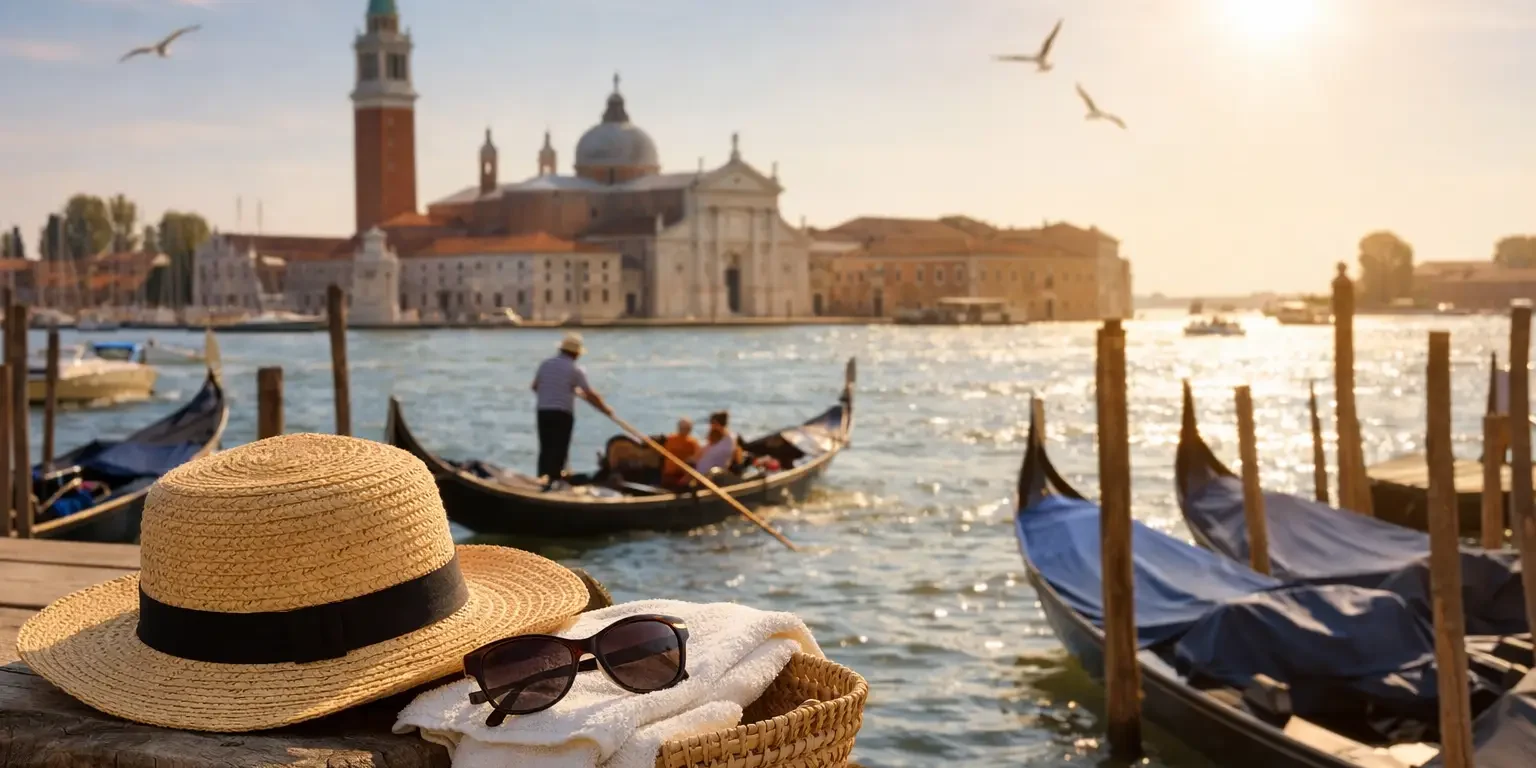
The first sip of a morning espresso beside a quiet Venetian canal can feel wonderfully mild in midsummer. By early afternoon, however, the stone pavements hold the sun and the lagoon air becomes noticeably humid. So, is it warm to visit Venice in July and August? Very much so. These are Venice’s hottest months, bringing long, luminous days, lively evenings, and a pace best enjoyed with thoughtful planning.
For travelers who appreciate beautiful interiors, unhurried meals, and the freedom to return to a cool private apartment between outings, summer can be a particularly rewarding time to experience the enchanted city. The key is not to treat Venice as a place to rush through. It is to let the day unfold around the weather.
Is It Warm to Visit Venice in July and August?
Yes. July and August are reliably hot in Venice, with daytime temperatures often reaching the low to mid-80s Fahrenheit. On the warmer days, temperatures can climb higher, particularly away from the water and in sunlit campi, or squares. Evenings are usually warm rather than cool, often remaining in the 70s after sunset.
Humidity is the detail many visitors notice most. Venice sits in a shallow lagoon, and still air can make a temperature that looks manageable on paper feel more intense. There is often a welcome breeze near the Grand Canal, on the waterfront, or during a vaporetto crossing, but it should not be counted on during the middle of the day.
Rain is possible in both months, usually in the form of a brief summer shower or thunderstorm. These episodes can clear the air and make an afternoon feel more comfortable, though they may also leave the streets feeling close and humid again afterward. A compact umbrella is sensible, but sun protection matters more often than rain gear.
July Versus August in Venice
July is high summer in full expression. The city is bright, energetic, and often very busy, with visitors filling the principal routes between San Marco, Rialto, and the Accademia. The daylight lasts well into the evening, making it easy to enjoy a late aperitivo, a concert, or a waterside dinner after the strongest heat has passed.
August is similarly warm and can feel even quieter in certain residential corners as some Venetians leave the city for their own holidays. At the same time, the central landmarks remain popular, and the heat can be persistent. Around Ferragosto, the Italian holiday on August 15, some independent shops and restaurants may adjust their hours or close for a period. This does not diminish the pleasure of a stay, but it rewards guests who reserve sought-after dining and experiences in advance.
Neither month is the choice for travelers hoping for crisp sightseeing weather. Yet both offer a different kind of Venice: sun on the water, open-air tables after dark, and a golden glow that makes even a familiar façade feel newly theatrical.
How to Enjoy Venice Comfortably in Summer
Venice is compact, but it is not effortless in extreme heat. Bridges, polished stone, narrow lanes, and limited shade can turn a short walk into a demanding one at 2 p.m. A more elegant approach is to shape the day around the city’s natural rhythms.
Begin early, when the calli are calm and the temperature is gentler. This is the right moment for St. Mark’s Basilica, the Doge’s Palace, or a favorite museum, especially when reserved entry allows you to avoid waiting in the sun. The early hours also reveal a more intimate Venice: delivery boats at work, residents crossing small bridges, and quiet reflections in canals before the crowds gather.
Plan a return indoors at midday. A leisurely lunch, a rest, and time in air-conditioned comfort are not a compromise in Venice. They are part of traveling well. The pleasure of a spacious apartment is especially clear in July and August, when guests can refresh, change for the evening, and enjoy the city again at its most flattering hour.
From late afternoon onward, Venice becomes more forgiving. Walk along the Riva degli Schiavoni as the light softens, take the vaporetto for a breeze across the water, or choose a table in a quieter campo. After sunset, the city often feels transformed. The heat eases, conversations linger outdoors, and the canals take on the still, cinematic atmosphere that draws travelers back year after year.
What to Wear and Carry
Choose light, breathable fabrics such as linen, cotton, and airy natural blends. A wide-brimmed hat and quality sunglasses are useful, particularly on open stretches near San Marco, the Zattere, and the lagoon-facing promenades. Comfortable shoes are essential, but they should also be suitable for warm weather and smooth, occasionally uneven paving stones.
A refillable water bottle deserves a place in every day bag. Venice has public drinking fountains, known as fontanelle, throughout the city, and staying hydrated makes a meaningful difference. Carry sunscreen, a small fan if you are especially heat-sensitive, and a light layer only for highly air-conditioned interiors or a late boat ride when there is a breeze.
Avoid building an itinerary around long walks at noon. Venice rewards wandering, but the best wandering happens when there is room to pause in a shaded passage, step into a church, or order something cold at a café without watching the clock.
Crowds, Water, and the Summer Atmosphere
Warm weather brings more than heat. July and August are among Venice’s most popular travel periods, so landmark areas and major waterbus stops can be crowded. The city remains full of quieter possibilities, but they are found by moving beyond the most direct routes. A morning in Dorsoduro, an evening in Cannaregio, or time on a less hurried canal can restore a sense of calm.
The lagoon is central to Venice’s summer character. Boat travel is not merely transportation; it is often the coolest and most scenic way to move through the city. A vaporetto ride offers a welcome pause from walking, while a visit to the lagoon islands provides open skies and a different perspective on Venice.
There is also the possibility of acqua alta, or exceptionally high water, although it is much more commonly associated with the cooler months. Summer weather systems can occasionally affect water levels, but visitors should not expect it to define a July or August stay. As always in Venice, flexible footwear and an attentive eye on local conditions are practical precautions.
Choosing the Right Place to Stay
In summer, location and in-room comfort have an outsized effect on the quality of a Venetian visit. A central address reduces time spent crossing the city in the hottest hours, while air conditioning, a well-equipped kitchen, and space to relax can make the rhythm of the day feel entirely your own.
At Ca’ Sant’Angelo, the setting on the Piano Nobile of a historic palazzo pairs the character of old Venice with the conveniences that matter after a sun-filled afternoon. Returning to a refined, private setting near San Marco allows guests to enjoy the city’s essential sights early or late, then retreat from the midday heat without sacrificing location.
For a summer stay, it is also worth considering the small comforts that are easy to overlook when booking: reliable Wi-Fi, a washing machine for light clothing, and the ability to enjoy a simple breakfast before heading out early. These details create the ease of living in Venice rather than simply passing through it.
When July or August Is the Right Choice
July and August suit travelers who enjoy sunshine, late dinners, animated streets, and a destination at its most vibrant. They are ideal if your vision of Venice includes evening strolls, boat rides under a clear sky, and leisurely days arranged around your own preferences rather than a strict schedule.
If you are sensitive to heat, prefer quieter landmark visits, or want to walk for hours in the middle of the day, spring or early fall may be more comfortable. But for those willing to embrace a slower summer rhythm, Venice offers a rare reward: mornings of quiet beauty, afternoons of restorative privacy, and nights when the entire city seems to belong to the water and the light.
Let the hottest hours be an invitation to pause, not a reason to miss Venice. With an early start, a considered midday retreat, and an evening left open for discovery, July and August can feel not just warm, but beautifully indulgent.