

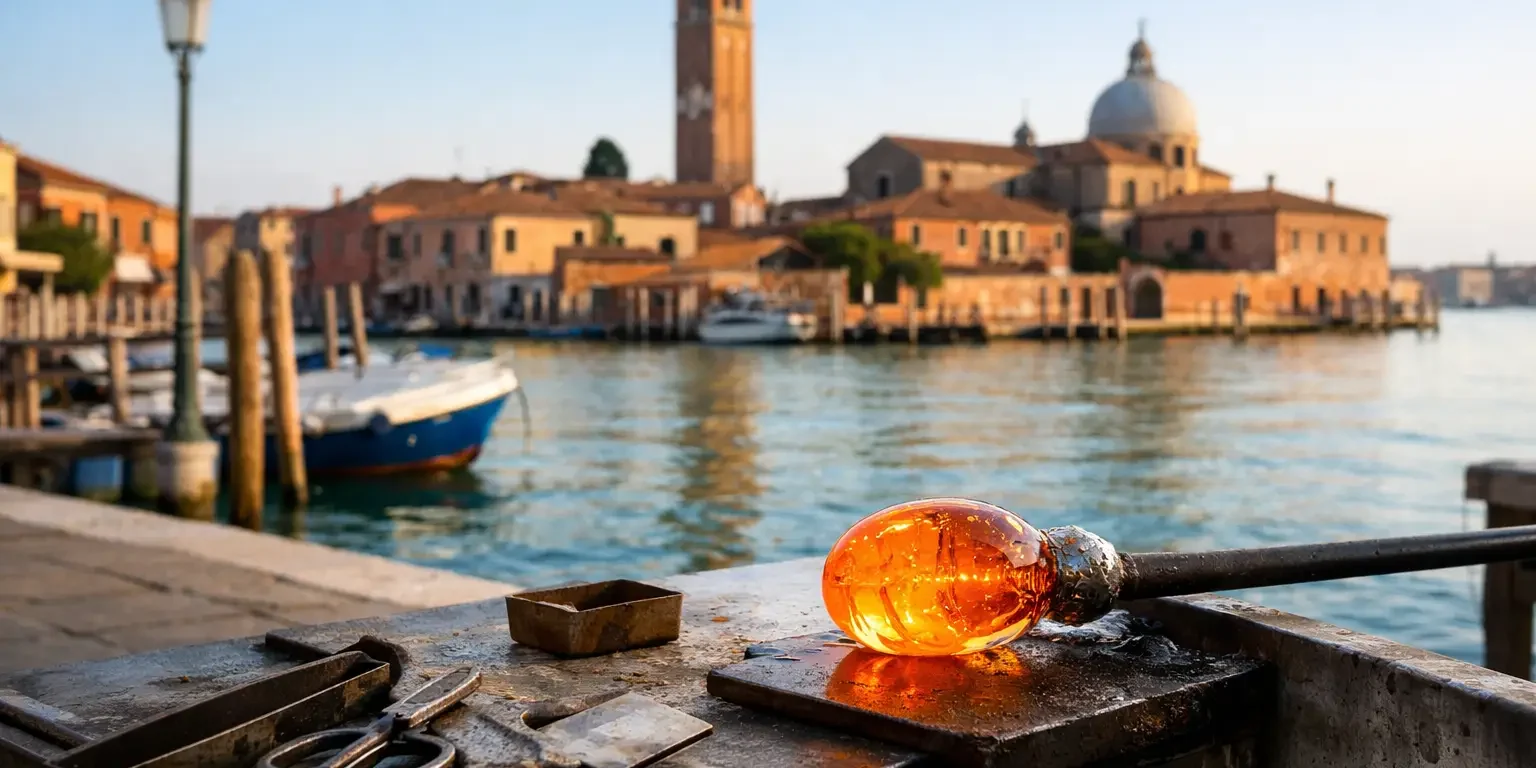
The first glimpse of molten glass taking shape is one of Venice’s most memorable experiences. A visit to a glass factory in Murano Island reveals a craft that is at once theatrical, exacting, and deeply tied to the lagoon’s history. Yet Murano is not simply a place to watch a demonstration or select a souvenir. For travelers who appreciate design, craftsmanship, and a sense of place, it is an opportunity to understand why Venetian glass remains so coveted.
From San Marco, Murano makes a rewarding half-day excursion, especially when approached with a little discernment. The island has working furnaces, elegant galleries, family workshops, and shops of widely varying quality. Knowing what to look for helps turn a pleasant outing into a meaningful encounter with one of Venice’s defining arts.
Why Murano Glass Still Matters
Glassmaking moved to Murano in the late thirteenth century, when Venice concentrated its furnaces away from the city center. Over generations, the island’s maestros developed techniques that became signatures of Venetian artistry: crystalline glass, colored canes, delicate filigree, gold leaf, enamel decoration, and sculptural forms that seem almost weightless.
That heritage is not preserved behind museum glass alone. It continues through skilled hands, close observation of heat and timing, and knowledge often passed through workshops and families. A finished vase, chandelier, tumbler, or small sculpture may appear effortless, but its character depends on countless decisions made in moments. The glass changes constantly while hot, and there is no opportunity to simply start again at the last second.
This is why authentic Murano glass has an appeal beyond its visual beauty. It carries evidence of process. Tiny variations in color, pattern, or form are not necessarily flaws. In handmade work, they can be signs that a piece was made as an object rather than produced as an identical unit.
Choosing a Glass Factory in Murano Island
Not every venue on Murano offers the same experience. Some factories welcome visitors for a brief furnace demonstration, while others focus on private appointments, contemporary collections, or retail. The right choice depends on whether your priority is seeing the craft in action, purchasing a special piece, or spending time with a particular artistic style.
A factory that actively produces glass on site is often the most compelling place to begin. You may see a maestro gather incandescent glass from the furnace, shape it with wooden tools, introduce color, or work alongside an assistant in a choreography refined through repetition. Demonstrations are usually concise, but even a few minutes can change how you see a finished object.
It is wise to confirm whether a demonstration is included, when furnaces are active, and whether advance arrangements are advisable. Furnace schedules can vary by season, production needs, and individual workshop practices. A visit planned around a specific maker or collection deserves a little preparation, particularly during busy travel periods.
The atmosphere also matters. Some visitors prefer a lively, traditional workshop where the heat, sound, and pace of production are part of the experience. Others may be more drawn to a quiet showroom with museum-quality lighting and time to consider pieces at leisure. Neither is inherently better. A considered itinerary can include both: the energy of the furnace followed by a gallery visit where technique becomes easier to appreciate.
What to Notice During a Demonstration
Watch the relationship between speed and control. Glassblowing is not hurried, even when the work appears fast. The artisan must act before the material cools, but every movement remains deliberate. A slight turn of the pipe, a measured breath, or the placement of a tool can determine symmetry, thickness, and final form.
Color offers another clue to complexity. In Murano, color is often built into the glass itself rather than added as surface decoration. Look closely at colored bands, flecks of gold, or patterned canes. The most intricate results may require separate components prepared in advance, then combined while hot with remarkable precision.
It is also worth remembering that a demonstration may show only one part of the process. Cooling, finishing, cutting, polishing, wiring a lighting piece, and quality control all take time beyond the furnace floor. A serious factory respects these stages, even if they are less dramatic to watch.
How to Recognize Work Worth Bringing Home
There is no single visual test that guarantees authenticity, and a label alone should not be the entire basis for a purchase. Instead, assess the whole experience. A reputable maker or retailer should be able to speak clearly about where the work was made, which techniques were used, and how the piece should be cared for.
Ask direct, simple questions. Was this made in Murano? Is it hand-blown, hand-finished, or assembled from handmade elements? Who designed it? Is there documentation or a certificate associated with the piece? The answers should feel informative rather than evasive. A beautiful object deserves a provenance that is equally clear.
Price is also a useful guide, though not a perfect one. Handmade Venetian glass requires specialized labor, materials, energy, and skill. An unusually inexpensive piece presented as elaborate, fully handmade Murano work warrants closer attention. At the same time, authentic pieces exist at many price points. A small, thoughtfully made bowl or ornament can be more personal than a larger object chosen only for its scale.
Choose something that will live well in your home. A graceful vase can become part of a dining table setting; a pair of glasses can recall Venice during an ordinary evening; a small sculpture may suit a bookshelf or desk. For a major lighting piece, confirm dimensions, installation requirements, lead times, shipping arrangements, and whether replacement components can be obtained in the future.
A More Considered Way to Visit Murano
Murano is best enjoyed without treating it as a quick stop between landmarks. Allow time to walk beyond the main arrival points, notice the canals and quieter residential streets, and pause for coffee before or after your factory visit. The island has a different rhythm from central Venice, and that contrast is part of its charm.
Morning often offers the most comfortable pace, particularly if you would like to see a working environment before the island becomes busier. A later visit can be ideal for those focused on browsing galleries and considering purchases after lunch. It depends on the kind of experience you want and how much time you wish to spend in conversation with makers or showroom staff.
Dress comfortably, but remember that active furnaces are warm and workshop floors may be practical rather than polished. Photography policies differ, especially around production areas and original designs. Asking before taking photographs is a small courtesy that reflects respect for the work being done.
For guests staying near San Marco, Murano is easy to incorporate into a day that still leaves room for Venice itself. The pleasure is in returning to the city with more than a shopping bag: perhaps a new appreciation for the skill behind the color and light that has shaped Venetian interiors for centuries. At Ca’ Sant’Angelo, personalized local guidance can help make room for that kind of unhurried discovery.
Let the Piece Carry the Memory
The best Murano purchase is rarely the one that tries hardest to announce itself. It may be a vivid glass fruit on a console, a finely patterned vase, or a modest object whose color changes as afternoon light moves across the room. What matters is that it feels connected to the moment you saw the craft take form.
Venice is a city of details: reflections on water, worn stone at a doorway, light held briefly on a canal. A well-chosen piece of Murano glass extends that experience beyond the journey, bringing a small, luminous part of the enchanted city into everyday life.