

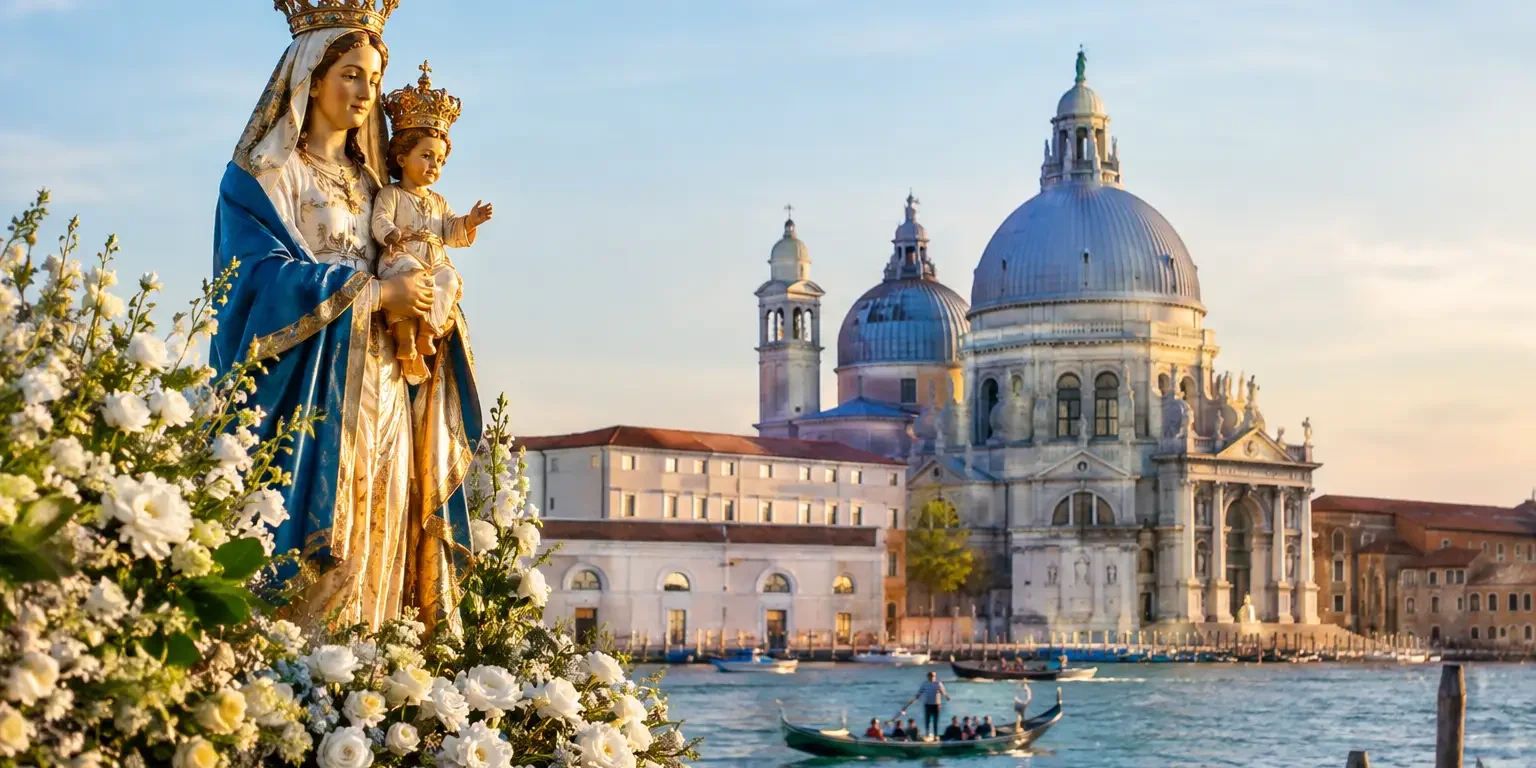
On November 21, Venice observes the feast of the madonna della salute with an intimacy that can surprise visitors accustomed to the city’s grandest spectacles. This is not a carnival parade or a staged pageant. It is a day of gratitude, remembrance, and quiet Venetian tradition, centered on the magnificent Basilica di Santa Maria della Salute at the entrance to the Grand Canal.
For travelers who wish to experience Venice beyond its famous monuments, the feast offers a rare view of the city as its residents live it. Candles glow in the basilica, families cross the water to offer prayers, and the crisp November air carries the scent of seasonal food stalls. It is a deeply local occasion, best approached with curiosity, patience, and respect.
Why the Feast of the Madonna della Salute Matters
The celebration began after one of the darkest chapters in Venetian history. In 1630, a devastating plague swept through the Republic of Venice, claiming a vast number of lives. The Venetian Senate vowed to build a church in honor of the Virgin Mary if the city were delivered from the epidemic.
When the plague receded, the Republic honored that promise. Architect Baldassare Longhena designed the Basilica della Salute, whose great white dome remains one of Venice’s defining silhouettes. Dedicated in 1687, the church became a lasting expression of thanksgiving and protection.
Each year, Venetians return to the basilica on November 21 to renew that gesture of devotion. The occasion honors the Madonna della Salute – Our Lady of Health – and has retained its emotional force across nearly four centuries. Even for nonreligious visitors, it is difficult not to feel the significance of a tradition observed with such steady, personal care.
A Votive Bridge Across the Grand Canal
One of the most memorable features of the day is the temporary votive bridge, created so worshippers can cross the Grand Canal on foot toward the basilica. Its route and arrangement may vary according to annual planning and water conditions, but the gesture remains the same: a practical crossing transformed into an act of communal remembrance.
Walking toward Santa Maria della Salute among Venetians is very different from arriving by vaporetto on an ordinary afternoon. The pace is unhurried but purposeful. You may see elderly residents carrying candles, parents guiding children through the crowd, and friends greeting one another before entering the church.
The bridge can be busy, particularly from late morning through the afternoon. It is worth accepting a slower rhythm rather than trying to rush through. This is an occasion where Venice asks visitors to observe before they photograph, and to make room for those who have come to pray.
Inside the Basilica
Within the basilica, visitors often find a long line moving quietly toward an image of the Madonna. Candles are lit, flowers are offered, and the atmosphere is more contemplative than ceremonial. Religious services take place during the day, and access to certain areas may be limited while worship is underway.
Dress with the same consideration you would bring to any active place of worship. Shoulders and knees should be covered, voices kept low, and phones put away when possible. A short visit can be meaningful, but those with a sincere interest in the service should allow time and follow the guidance of staff and volunteers.
What Venice Feels Like on November 21
The Feast of the Madonna della Salute falls in one of Venice’s most atmospheric seasons. November brings softer light, mist over the lagoon, and a welcome calm after the busiest months of the year. The city may feel less crowded overall, yet the area around the Salute becomes a focal point for local life.
Near the basilica, stalls traditionally sell candles, devotional items, and simple seasonal treats. One dish associated with the festival is castradina, a rich, savory preparation made with preserved mutton and cabbage. Its origins reach back to the years of plague, when preserved meat was among the provisions available to the city. It is an acquired taste, perhaps, but a memorable one for travelers interested in Venice’s culinary history.
Elsewhere, the day continues at a gentler pace. Cafés fill with residents taking a pause from the chill, and the narrow lanes near San Marco retain their evening glow. Because November weather can change quickly, it is wise to plan for rain and cooler temperatures. Waterproof shoes, a compact umbrella, and a warm outer layer make a substantial difference when spending time along the canal.
How to Experience the Feast With Ease
A thoughtful plan allows you to enjoy the celebration without turning it into a checklist. Start early if you prefer a quieter approach, especially if you hope to enter the basilica before the busiest hours. Alternatively, visit later in the day when the lights and candles lend the neighborhood a particularly beautiful atmosphere.
Avoid treating the temporary bridge as a shortcut. It is often crowded, and its purpose is devotional rather than logistical. If your schedule is flexible, allow extra time for crossing the Grand Canal or reaching appointments in Dorsoduro and San Marco.
Water transportation can also be busier than usual. Venice’s public boat service is dependable, but routes, boarding patterns, and waiting times may be affected by the celebration. A centrally located residence offers an advantage here: you can return for a rest, change for dinner, or simply step away from the activity without sacrificing the evening.
At Ca’ Sant’Angelo, in the heart of the San Marco district, guests can pair the city’s spiritual and cultural traditions with the comfort of an elegant private apartment. After a day in the November air, the pleasure of returning to generous living spaces, a well-equipped kitchen, and attentive local support feels especially fitting.
Give the Day Room to Unfold
The feast is best experienced with only a few intentions. Attend the basilica, cross the votive bridge if conditions allow, and leave time to wander. A quiet coffee near Campo Santo Stefano, an unplanned stop in a neighborhood bakery, or a twilight view across the water can become the part of the day you remember most.
This is also a good date to reserve dining thoughtfully. Some restaurants may have altered hours or fuller tables, while others will be wonderfully calm. Ask for recommendations that suit your preferred atmosphere, whether that means a polished Venetian dining room or a modest neighborhood table serving traditional dishes.
A Different Kind of Venetian Luxury
Luxury in Venice is not always found in the busiest rooms or the most photographed addresses. Sometimes it is the privilege of seeing the city keep faith with its own past. On November 21, the Feast of the Madonna della Salute reveals a Venice shaped by resilience, ritual, and the enduring relationship between water, architecture, and daily life.
Come prepared for a little rain, a little waiting, and a more reflective pace than the city’s headline attractions demand. In return, Venice offers something rarer than a perfect itinerary: a place within one of its most heartfelt traditions.