

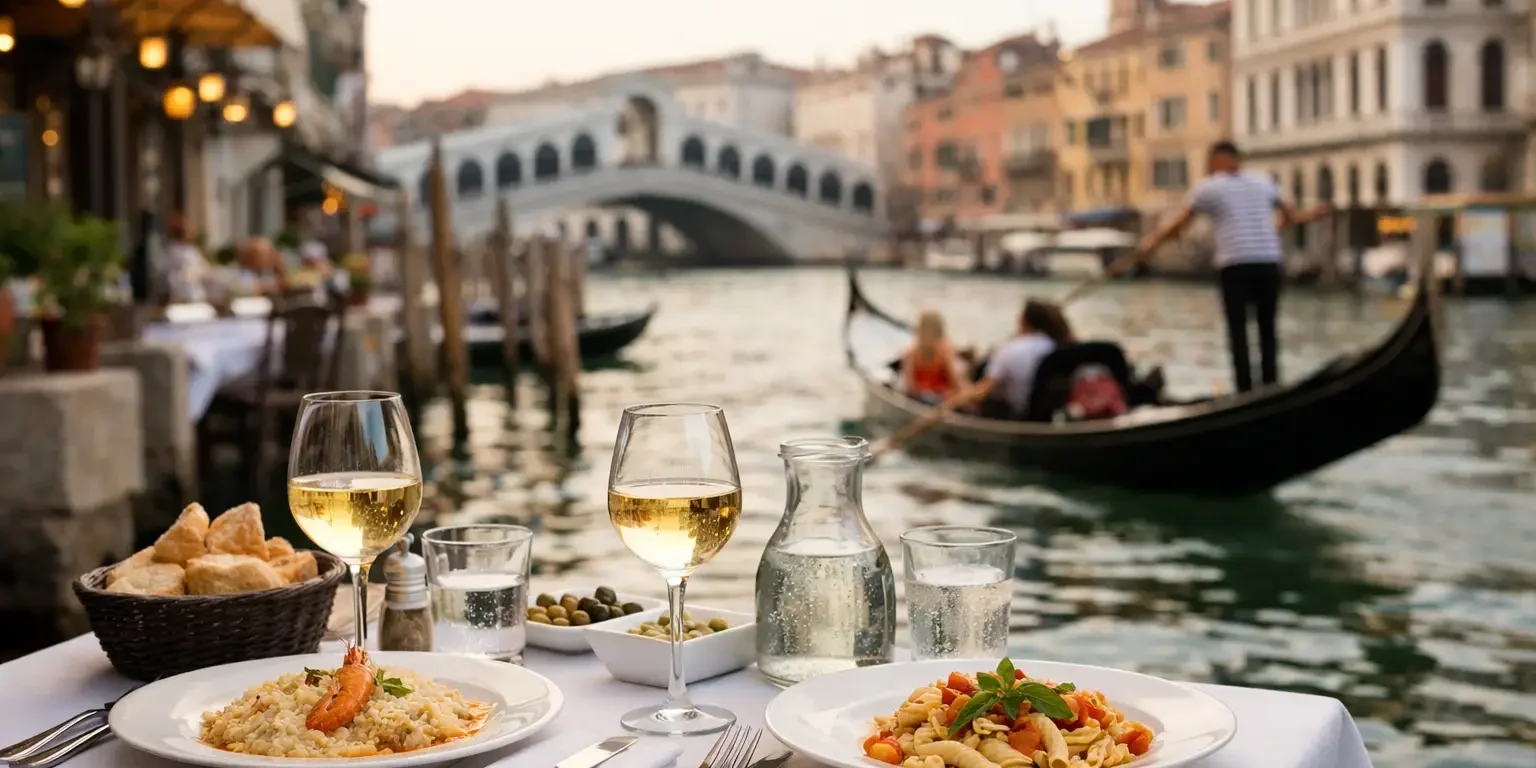
A table beside a quiet canal, a glass of crisp white wine, and a plate of lagoon seafood can be one of Venice’s great pleasures. It can also be surprisingly expensive if the menu is chosen in the busiest stretch of San Marco without a little context. So, are Venice restaurants expensive? They can be, but Venice offers a far wider range of dining than its reputation for costly tourist meals suggests.
The difference usually comes down to location, timing, and the kind of experience you want. A formal dinner in a historic setting commands a premium, as it should. Yet a thoughtful day of coffee, cicchetti, market provisions, and one well-chosen dinner can feel both indulgent and well judged.
What a Meal in Venice Typically Costs
Venice is not a low-cost destination, particularly around San Marco, the Rialto Bridge, and the waterfront. Ingredients arrive by boat, restaurant spaces are limited, and operating a business in a historic city involves real complexity. Those realities are reflected in the bill, especially at restaurants with notable views, polished service, or a celebrated kitchen.
For a useful sense of scale, expect an espresso at the bar to cost roughly €1.50 to €3, while a seated coffee in a landmark square can cost considerably more. A casual lunch of cicchetti – Venice’s small savory plates – and a drink may come to €15 to €30 per person, depending on how generously you order. At a relaxed trattoria, a pasta or seafood main often falls around €18 to €32, with appetizers and desserts adding to the total.
For dinner at a refined restaurant, €70 to €120 per person is a reasonable planning range before wine, and more for tasting menus or particularly sought-after dining rooms. This is the level at which Venice becomes memorable in a different way: careful service, exceptional local fish, seasonal vegetables from the islands, and a dining room that feels inseparable from the city itself.
Prices alone do not tell the whole story. A €25 plate of pasta may be poor value if it is hurried and ordinary, while a €40 plate of expertly prepared spider crab in a serene, characterful restaurant can be one of the most rewarding moments of a Venetian stay.
Why Some Venice Restaurants Cost More
The city’s geography is part of every restaurant check. Fresh produce, wine, linens, glassware, and kitchen supplies all move through a city without roads or delivery vans. Venice also has a short dining room season compared with many major cities, and a limited number of tables in its historic buildings.
Then there is the view. Dining beside the Grand Canal, overlooking a famous square, or steps from a major landmark often carries a location premium. It is not necessarily a warning sign, but it is worth recognizing what you are paying for: ambiance, access, and a place in one of the world’s most extraordinary settings.
Service charges can also create confusion for American visitors. Most restaurants include a coperto, a per-person cover charge generally listed on the menu. It may be modest, but it is separate from the food price. A servizio charge, if applied, is typically shown as a percentage. Tipping is appreciated for warm, attentive service, but the large percentage customary in the United States is not expected.
The Costliest Choice Is Often the Most Convenient One
Restaurants directly beside landmark routes have an advantage when travelers are tired, hungry, and ready to sit down immediately. That convenience can be worthwhile on occasion. But choosing every meal this way is the fastest route to an inflated food budget and a less personal experience of Venice.
A few turns away from the heaviest foot traffic, the mood changes. Small bacari fill with locals stopping for a glass of wine. Neighborhood trattorias offer shorter menus shaped by the market. The meal may cost less, but more importantly, it often feels more connected to the rhythm of the city.
Are Venice Restaurants Expensive Near San Marco?
San Marco is one of the most desirable places to stay and dine, and prices reflect its exceptional setting. It is also more varied than first appearances suggest. The key is to distinguish between a restaurant designed around a prime view and one designed around its cooking.
For a special evening, San Marco offers elegant dining rooms where the higher spend can be part of the occasion. Book ahead, dress for the atmosphere, and allow time for aperitivi and wine. This is not the moment to rush through a meal or judge it solely by the cost of a single course.
For everyday dining, look beyond the most photographed terraces. Seek menus that state prices clearly, specialize in a few dishes, and show an evident connection to Venetian ingredients. A restaurant offering seasonal lagoon fish, soft-shell crab when in season, artichokes from Sant’Erasmo, or classic bigoli pasta is often making a more meaningful promise than one offering an oversized menu in several languages.
Reservations are useful for excellent restaurants, particularly from spring through early autumn and during Carnevale, Easter, and the Christmas season. Planning even two or three dinners before arrival allows you to choose based on the experience you want, rather than settling for whatever is open nearby.
The Most Enjoyable Way to Balance Your Food Budget
Venice rewards travelers who give each meal a different purpose. Begin with a proper Italian breakfast at home or in a favorite neighborhood café. Let lunch be light and spontaneous: cicchetti, a tramezzino, or a simple plate of pasta after visiting a church, gallery, or hidden courtyard. Save one or two evenings for restaurants that make the meal an occasion.
This approach is especially appealing when staying in a serviced apartment with a real kitchen. Rather than treating every breakfast, snack, or late-night bite as a restaurant expense, you can keep beautiful local staples at hand: fruit, yogurt, pastries, cheese, bread, sparkling water, and a bottle of wine chosen without a restaurant markup.
The Rialto Market area remains an inspiring place to shop for those who enjoy cooking, although hours and vendor availability vary. A few carefully chosen ingredients can become an easy lunch between outings or a quiet supper after an evening walk. In Venice, that kind of flexibility is not about compromising on luxury. It is about having the freedom to live well at your own pace.
At Ca’ Sant’Angelo, the fully equipped kitchens make this balance particularly natural. Guests can enjoy the pleasure of Venice’s finest tables while also returning to the privacy of an elegant home, where breakfast need not be scheduled and a chilled bottle can be opened whenever the moment feels right.
How to Recognize Good Value, Not Just Low Prices
The best meals in Venice are not always cheap, and the cheapest meals are not always the wisest choice. Look for clarity instead. Menus should display prices, cover charges should be stated, and staff should be comfortable explaining the day’s fish or a regional specialty.
Be mindful of seafood priced by weight. This is common and can be excellent, but ask about the approximate cost before ordering if the price is not clearly listed. The same applies to market-fresh catch and larger shared dishes. A brief question avoids surprises and lets you choose with confidence.
Lunch menus can offer excellent value, but do not assume every fixed-price offering is a bargain. Consider the setting, portion size, ingredients, and whether you actually want a full meal at midday. Sometimes a few cicchetti and a glass of local wine provide a more distinctly Venetian, and more satisfying, alternative.
Dining Well Without Making Every Choice a Calculation
Venice is a city for lingering, and food is part of its theater. Denying yourself a canal-side table, a beautiful seafood dinner, or a graceful café simply because it costs more than it would elsewhere can miss the point. The answer is not to avoid expense, but to spend with intention.
Choose the view when the view matters. Choose the formal restaurant when the occasion deserves it. On the rest of the day, follow the quieter lanes, order what is in season, and make room for simple pleasures at home. With that rhythm, Venice’s dining scene feels less like a series of tourist prices and more like a deeply personal part of the enchanted city.