

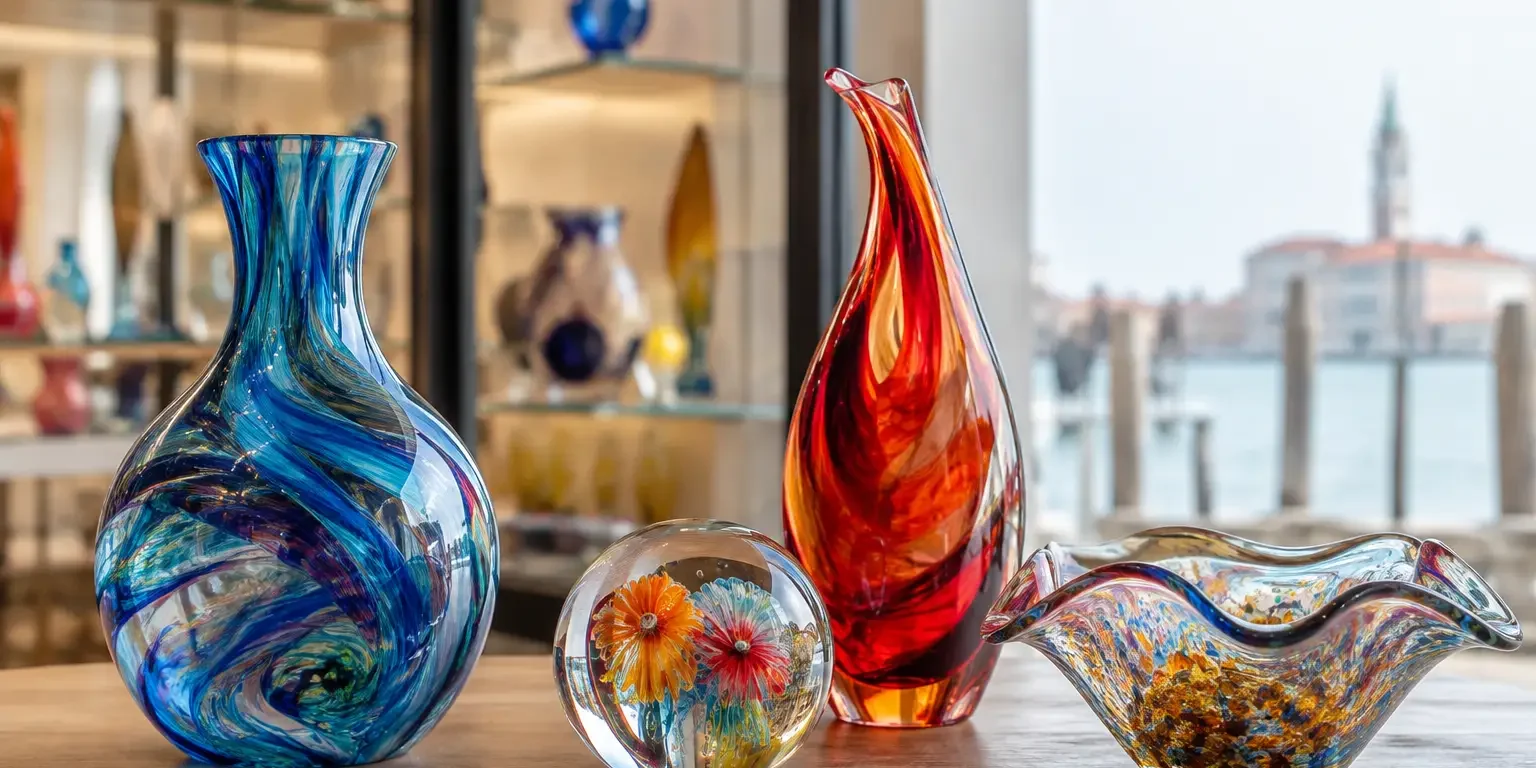
A Murano glass chandelier catches the afternoon light very differently from a souvenir in a shop window. It has weight, small variations in color, and the quiet evidence of a person shaping molten glass at extraordinary heat. So, is it worth buying items from a glass shop in Murano? For travelers who value craftsmanship, design, and a lasting connection to Venice, it often is – provided you know what you are buying and why.
The island’s glassmaking heritage is not simply a decorative chapter in Venice’s history. It is a living craft, practiced by furnaces and artists whose methods have been refined over centuries. A well-chosen piece can be both useful and deeply personal: a set of drinking glasses for a dinner table at home, a hand-blown vase, a sculptural object, or a small jewel-like ornament that recalls the lagoon long after a stay in the enchanted city.
Why Murano Glass Has Real Value
Murano has been associated with Venetian glassmaking since the late 13th century, when glass furnaces were moved from Venice to the island. Over time, local makers developed techniques that remain distinctive today: lattimo, the milky white glass once made to resemble porcelain; filigree patterns formed with fine glass canes; vivid murrine mosaics; and the richly layered colors seen in many contemporary pieces.
What you are paying for is not only the finished object. It includes skilled labor, artistic direction, a working furnace, specialist materials, and the unavoidable imperfections of handmade production. A slight asymmetry or a tiny bubble is not necessarily a flaw. In an authentically hand-blown piece, it can be part of the evidence that no factory mold produced thousands of identical copies.
That does not mean every item labeled “Murano glass” deserves a luxury price. Shops vary considerably. Some represent active local furnaces and established designers; others sell imported goods, glass made elsewhere, or very simple items intended for the souvenir market. The value lies in provenance, workmanship, and whether the piece suits your own taste, not in the word Murano alone.
Is It Worth Buying Items From a Glass Shop in Murano?
It is most worthwhile when the purchase is intentional. If you would like a meaningful object for your home, appreciate decorative arts, or are seeking a gift with a genuine sense of place, buying directly on Murano can be one of Venice’s most rewarding shopping experiences. Visiting the island also gives you the opportunity to compare styles in person, see scale and color accurately, and, in some cases, speak with people connected to the making of the work.
For a traveler seeking the lowest possible price, however, the answer may be different. Authentic, hand-finished Murano glass is rarely inexpensive, especially for large pieces, intricate filigree, signed art glass, or lighting. Bargain prices for elaborate work should invite questions. A small, well-made item bought with confidence is generally a better choice than a larger object purchased only because it seems like a deal.
The setting matters, too. A visit to Murano can offer a welcome change of pace from the busy streets around San Marco. The island is part of the wider Venetian experience, with canals, workshops, and a more residential rhythm. But do not feel obliged to buy simply because you have made the journey. The most satisfying purchases tend to be the ones you would still want in your home even if they carried no travel story at all.
What to Look for Before You Buy
Begin with a simple question: where was this made? A reputable seller should be able to answer clearly and explain the workshop, artist, or furnace behind the piece. Ask whether it was made on Murano, whether it is hand-blown or hand-finished, and whether the artist signs it. For more significant purchases, request written documentation, including the maker’s name, description, date, and price.
Some works carry the Vetro Artistico Murano trademark, a registered certification mark used by qualifying producers. It can be a helpful indicator, but it should not replace a conversation about provenance. Not every excellent piece will bear the mark, and documentation remains especially valuable for collectible objects, lighting, and higher-priced purchases.
Look closely at the finish. Handmade glass should feel considered rather than careless. Examine the rim of a glass, the balance of a vase, the clarity of its colors, and the way decorative elements are incorporated. A pontil mark, where the glassblower’s rod was detached, may be visible on the base of hand-blown work. It is not a defect in itself, though it should be properly finished for the object’s purpose.
It is also wise to ask about practical care. Can a drinking glass go in the dishwasher? Is a vase suitable for fresh flowers? Does a light fixture meet electrical requirements in the United States? These details protect both the purchase and the pleasure of using it.
Matching the Piece to Your Home
Murano glass is at its best when it becomes part of everyday life rather than an object kept away in a cabinet. A pair of tumblers in a subtle lagoon blue can feel elegant without overwhelming a modern table. A clear or softly tinted vase often travels more easily across different interiors than a heavily ornate statement piece. If your home is traditional, a classic Venetian form may feel natural; if it is contemporary, consider sculptural glass with cleaner lines.
Color deserves particular attention. Venetian light can make intense reds, cobalt blues, gold leaf, and multicolored murrine feel irresistible. Before deciding, picture the object in your own rooms and under your own lighting. A photograph of the room can be useful when shopping, especially for a larger vase, mirror, or lighting piece.
For gifts, smaller pieces are often the most graceful option. A paperweight, ornament, pair of earrings, or a finely made bowl has a sense of occasion without creating pressure for the recipient to redesign a room around it. The best gift is not necessarily the most elaborate one. It is the one that feels specific and well chosen.
Price, Shipping, and the Details That Matter
Prices reflect a broad range of work. Small decorative objects may be accessible, while signed vessels, elaborate chandeliers, and museum-quality art glass can represent a serious investment. Set a comfortable budget before entering a shop, then allow quality to guide the final decision. There is no need to negotiate aggressively with a craft business, but it is entirely reasonable to ask what is included, whether the piece is signed, and how shipping or insurance is handled.
For fragile or larger purchases, professional shipping can be preferable to carrying the item through airports and connections. Ask the shop whether it packs and ships directly to the United States, what insurance covers, the estimated delivery timeframe, and who is responsible for any import duties or taxes. Obtain the full terms in writing. A lower purchase price can lose its appeal if shipping, customs charges, or inadequate protection are left unclear.
If you are taking a smaller object with you, request careful wrapping and keep it in your carry-on when possible. Checked baggage exposes glass to rough handling and changing pressure. Retain receipts, certificates, and the seller’s contact information until the piece is safely home.
Avoiding the Common Disappointments
The most common disappointment is buying quickly in a demonstration setting where the excitement of watching glass being formed makes the showroom feel like the only place to purchase. A furnace demonstration can be fascinating, but take a moment afterward. Compare pieces, inspect quality, and ask questions without feeling rushed.
Another is assuming that a label, sticker, or verbal assurance is enough for an expensive purchase. Clear documentation is more reassuring. Finally, be cautious with claims that a piece is antique or rare. If that distinction matters to you, buy from a specialist able to provide a credible history and condition information.
A refined Venetian stay is built from moments that feel personal: morning light on the canal, a favorite neighborhood table, an object chosen with care. Guests at Ca’ Sant’Angelo often seek this more lived-in side of the city, where a purchase is not merely another souvenir but a detail that continues the experience at home.
Choose the piece that makes you pause, ask a few thoughtful questions, and imagine where it will live. If its workmanship, provenance, and presence still feel right after that, Murano glass is more than worth bringing home.