

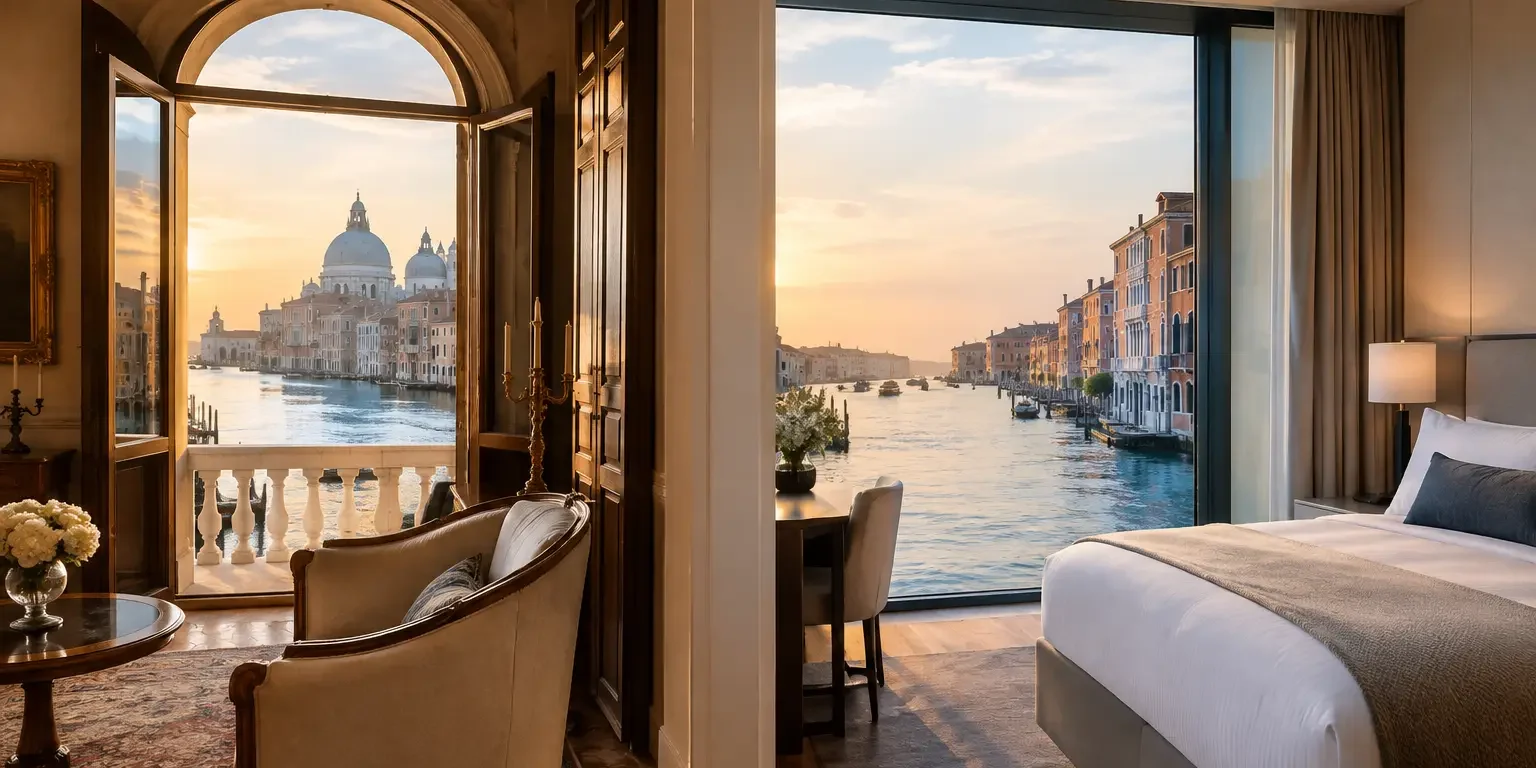
A morning in Venice can begin in two very different ways. You might step from a hotel elevator into a busy breakfast room, then join the current of visitors heading toward St. Mark’s Square. Or you might make coffee in your own elegant kitchen, open the shutters onto a quiet Venetian passage, and leave the palazzo when the city feels ready for you. When choosing a palazzo apartment or modern hotel, the difference is not simply where you sleep. It shapes the rhythm, privacy, and character of every day.
For travelers who appreciate polished surroundings but do not want Venice to feel like a standard city break, the choice deserves more than a quick comparison of room rates. A modern hotel offers familiar rituals and easy access to on-site services. A luxury apartment in a historic palazzo offers something rarer: the freedom to inhabit Venice with the comfort of a carefully considered private residence.
Palazzo Apartment or Modern Hotel: What Changes?
The hotel experience is designed around consistency. Reception is close at hand, housekeeping follows a set routine, and shared spaces create a sense of activity. For a short stay with a full sightseeing schedule, that structure can be appealing. There is comfort in knowing exactly what to expect when you return after dinner or a day of travel.
A palazzo apartment shifts the experience from being a guest in Venice to living within it, even if only for a few nights. Rather than one room serving every purpose, there is room to settle in: a living area for an unhurried aperitivo, a kitchen for breakfast before the crowds arrive, and separate spaces that make the day feel less compressed. In a city of narrow calli and busy landmarks, having a private retreat becomes part of the luxury.
This does not mean choosing an apartment requires giving up attentive hospitality. The finest serviced apartments pair residential independence with knowledgeable, responsive support. The important distinction is that service is tailored to your plans instead of constantly surrounding them.
Space has a different value in Venice
Venice is wonderfully compact, but it can make conventional hotel rooms feel smaller after a few days. Between a shopping bag from a Murano glassmaker, coats after an evening vaporetto ride, and the natural wish to slow down between outings, space quickly becomes valuable.
A luxury apartment provides room to arrive properly. You can unpack, sit down with a guidebook, share a bottle of wine, or simply take an afternoon pause without feeling confined to the edge of a bed. For couples, this added ease creates a more relaxed and private stay. It also suits travelers who value calm after a day spent among Venice’s visual riches.
A modern hotel may still be the right fit if the visit is very brief and the room is mainly a place to sleep. But for a longer weekend or a more leisurely Venetian itinerary, an apartment’s additional space often changes the entire experience.
Privacy without isolation
Hotels bring energy. A lobby, bar, and breakfast room can be enjoyable, especially for travelers who like a sociable atmosphere or the immediate convenience of on-site dining. Yet Venice has its own public theater outside the door: cafés, galleries, restaurants, and the ever-changing life of its canals.
An apartment allows guests to choose when to participate. You may return from a late dinner and enter your own discreet residence rather than passing through active communal spaces. You can spend a quiet morning inside before crossing a small bridge toward San Marco. The city remains close, but the pace is yours.
For many discerning travelers, this is the appeal of a historic palazzo. It offers a sense of arrival and exclusivity without separating you from the neighborhood. The building has a story, while the apartment gives you the privacy to create your own.
Heritage Atmosphere, Modern Ease
A historic setting should never require a compromise in comfort. The ideal palazzo apartment preserves the details that make Venice memorable – high ceilings, gracious proportions, noble-floor character, and the quiet romance of an old residence – while providing the practical features contemporary travel demands.
A fully equipped kitchen makes the first hour of the day more personal. Pick up fresh pastries, fruit, or local delicacies and enjoy breakfast on your own schedule. A washing machine can be unexpectedly welcome after several days of travel, while a dishwasher, high-speed Wi-Fi, satellite TV, and thoughtful climate control remove the small inconveniences that can distract from a special stay.
These details are not merely functional. They preserve time and ease. Instead of planning around a hotel breakfast window or treating every meal as an obligation, you have choices. You can linger over coffee, enjoy a quiet night in after the theater, or store provisions for an early departure.
A modern hotel typically provides efficiency in a different form: daily room service, a concierge desk, perhaps a fitness center or restaurant. Those amenities matter to some guests, and there is no universal answer. The better question is which conveniences support the way you want to experience Venice.
Service should feel personal, not distant
The strongest argument for a hotel is often peace of mind. Travelers want someone to call when they need help with arrival arrangements, restaurant ideas, tours, tickets, or a practical question about getting around the city. That reassurance is valuable, particularly in Venice, where the route that looks shortest on a map may involve a water crossing, a hidden courtyard, or more bridges than expected.
A professionally managed luxury apartment can offer that same reassurance while retaining a residential atmosphere. Tailor-made guest assistance means support is available when it is useful: before arrival, while organizing plans, or when a local recommendation would make the evening better. It is hospitality with discretion.
At Ca’ Sant’Angelo, this balance is central to the experience. Its renovated apartments on the Piano Nobile of a historic Venetian palazzo combine private, beautifully appointed living spaces with attentive guest support near San Marco. The result is not an imitation of a hotel, but a more individual expression of luxury hospitality.
Location Is More Than a Pin on a Map
A hotel’s address can be convenient, but a residence within a central Venetian neighborhood lets guests feel the city beyond its headline sights. Staying near San Marco places major landmarks within easy reach while allowing the day to unfold through smaller discoveries: a favorite coffee bar, an elegant shop window, a quiet canal that becomes familiar on the walk home.
This is where the palazzo apartment has a particular advantage. It creates continuity. You are not simply returning to accommodation near the center; you are returning to your Venetian address. That feeling can be especially meaningful in a destination as layered and theatrical as Venice.
Of course, location still needs to match your priorities. If immediate access to a hotel restaurant, a staffed lobby at every hour, or a large range of facilities matters most, a modern hotel may be preferable. If you value centrality alongside privacy, local texture, and the ability to set your own schedule, a serviced apartment is likely the more compelling choice.
How to Choose With Confidence
Rather than asking which option is objectively better, consider the kind of stay you hope to remember. A modern hotel is often ideal for travelers who prefer a tightly structured visit, enjoy being surrounded by hotel amenities, or are only in Venice briefly. It offers predictability and a familiar framework.
A palazzo apartment is especially suited to those who want Venice to feel more intimate. It is for travelers who imagine lingering over breakfast, bringing back something special from the market, dressing for an evening out without rushing around a single room, and returning to surroundings that feel distinctly Venetian. The appeal lies in both freedom and refinement.
Before booking, look beyond photographs and square footage. Ask whether the apartment is professionally serviced, whether modern amenities are genuinely included, how guest assistance works, and how easily you can reach the places that matter to you. In Venice, where every district has its own mood, the setting and support behind the stay are as important as the interiors.
The most memorable Venetian visits leave space for the unplanned: a sunset seen from an unfamiliar bridge, a tiny bacaro discovered after getting pleasantly lost, a slow return through softly lit streets. Choose the accommodation that gives those moments room to happen – and a beautiful place to come home to afterward.