

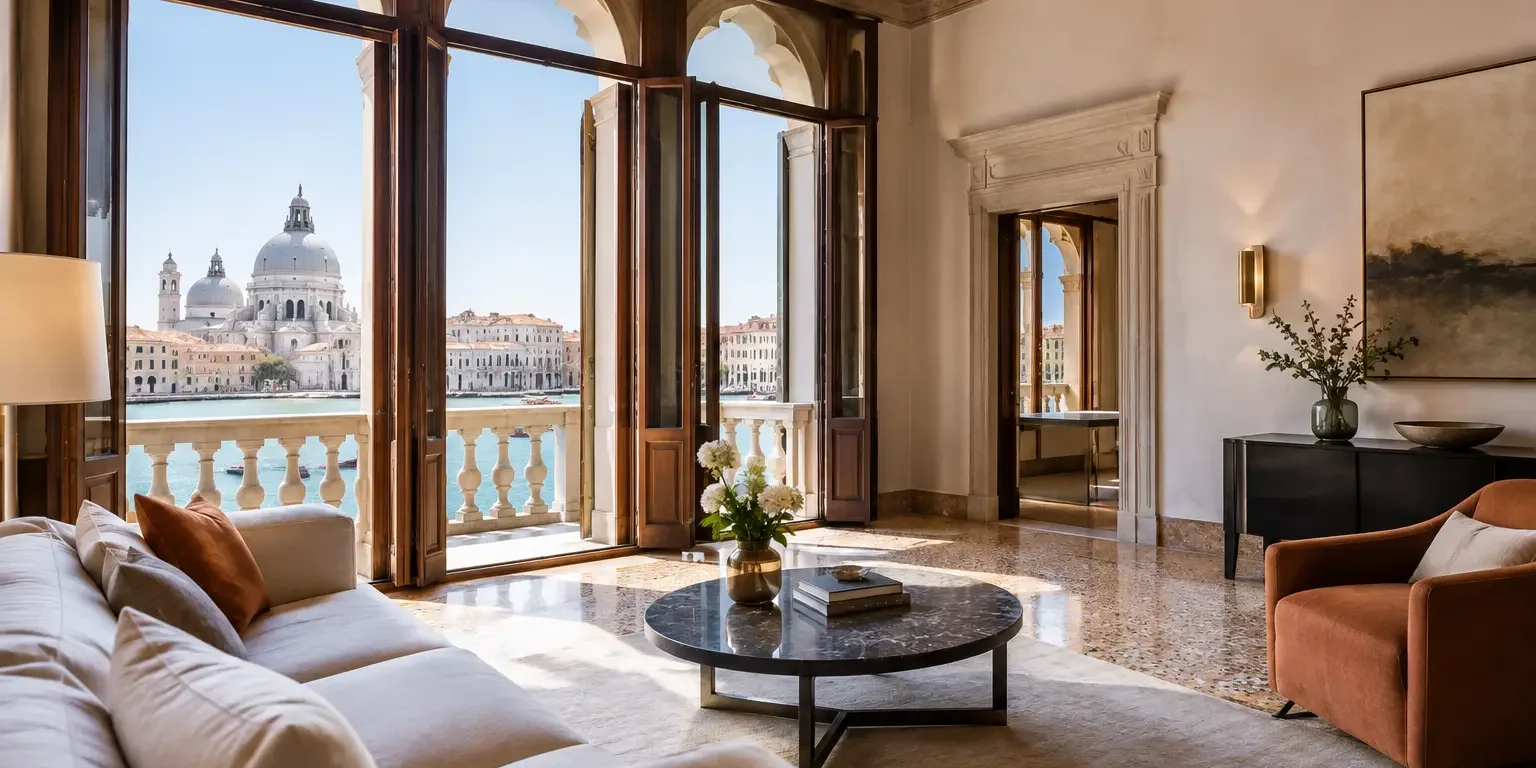
The difference is often felt at the front door. Beyond a quiet Venetian passageway, a historic palazzo may reveal high ceilings, original proportions, light filtering across terrazzo floors, and rooms designed for a more gracious pace of life. This guide to renovated palazzo apartments explains what to look for when choosing a stay that honors Venice’s past while making every day in the city comfortably your own.
A palazzo apartment is not simply a beautiful place to sleep between museum visits. At its best, it gives you a private address in the enchanted city, with space to settle in after a morning at St. Mark’s Basilica, an unhurried lunch near the canals, or an evening walk home through San Marco. The essential question is whether the renovation has preserved the character that makes the building special while delivering the practical ease discerning travelers expect.
What Defines a Renovated Palazzo Apartment?
A Venetian palazzo was traditionally a grand private residence, often positioned along a canal or within a prestigious neighborhood. Its piano nobile, or noble floor, was the principal level of the home: a place for receiving guests, entertaining, and displaying architectural refinement. These floors frequently have generous ceiling heights, handsome windows, formal room arrangements, and details that cannot be reproduced in a new building.
A thoughtful renovation respects those qualities rather than treating them as a backdrop. Historic features might include exposed beams, stonework, terrazzo or wooden floors, decorative plasterwork, and the distinctive scale of old Venetian rooms. Yet heritage alone does not create a luxurious stay. The apartment should also feel composed, cared for, and genuinely easy to live in.
That balance is particularly valuable in Venice, where an authentic building can come with complications if it has not been updated carefully. A well-renovated residence considers lighting, climate control, sound insulation, water pressure, kitchen function, and Wi-Fi as seriously as it considers finishes and furnishings. The result should feel historic without feeling inconvenient.
A Guide to Renovated Palazzo Apartments: Start With Location
Venice rewards proximity, but the right location is about more than ticking off landmarks. Staying near San Marco places many of the city’s defining experiences within an easy walk: St. Mark’s Square in the early morning, the Teatro La Fenice before a performance, galleries, celebrated restaurants, and quiet streets that become more intimate once day visitors depart.
A central address also changes the rhythm of a short stay. You can return home between plans, rest after a walk, prepare for dinner without rushing, or step out again when the light softens over the canals. This flexibility is one of the clearest advantages of an apartment over a conventional room.
Still, central does not need to mean exposed to constant activity. Consider the relationship between the apartment and its surroundings. A refined palazzo residence may be moments from Venice’s best-known sights while remaining tucked along a calmer calle or courtyard. This is often the ideal combination: the city close at hand, and a peaceful retreat when you close the door.
Look Beyond the Restoration’s First Impression
Photographs can convey atmosphere, but the most meaningful signs of quality are often practical. When evaluating a renovated palazzo apartment, look for a clear sense that old and new have been considered together.
Start with the essentials of comfort. Bedrooms should be restful and thoughtfully arranged, with quality linens, effective window treatments, and climate control suited to the season. Bathrooms should feel contemporary and impeccably maintained, not merely inserted into an old space. In Venice’s humid environment, careful upkeep and dependable ventilation matter as much as elegant materials.
Then consider how the kitchen is equipped. A full kitchen gives you the freedom to begin the day slowly, enjoy produce from a local market, or linger over an aperitivo before dinner. It should offer more than decorative cabinetry: reliable appliances, adequate cookware, a dishwasher, and room to prepare something simple all make a difference.
Laundry facilities are another understated luxury, particularly for travelers spending several days in Italy or moving between destinations. A washing machine allows you to pack more lightly and feel settled rather than transient. High-speed Wi-Fi, satellite TV, and straightforward controls for heating or air conditioning similarly matter because they remove small points of friction from the day.
Design should support this comfort rather than compete with it. The finest interiors feel considered but not over-staged. They allow the building’s original character to speak while providing beautiful, useful furnishings for reading, dining, working briefly, or simply watching Venetian life unfold outside the windows.
Choose Space That Supports Your Way of Traveling
The appeal of an apartment lies partly in having separate areas for different moments of the day. A living room gives mornings and evenings a sense of ease that is difficult to recreate in a single hotel room. A dining table creates a natural setting for breakfast, a relaxed glass of wine, or planning the following day’s discoveries.
Before booking, review the floor plan or room descriptions closely. Historic buildings can have wonderfully individual layouts, and that individuality is part of their charm. It can also mean that no two apartments offer the same arrangement of rooms, views, stairs, or access. Choose the residence that suits how you prefer to spend your time indoors, not only the one with the most dramatic photograph.
Privacy is worth considering as well. A private apartment offers the pleasure of returning to your own rooms, with no shared lobby rhythm or housekeeping interruptions to shape the day. For travelers who value discretion, this residential feeling is a meaningful form of luxury.
Service Is Part of the Experience
Independence should not mean being left to manage every detail alone. The most accomplished apartment stays combine the freedom of a private residence with attentive, hotel-level support when it is useful.
Before arrival, clear directions and practical guidance are especially helpful in Venice. The city does not operate like a destination built around cars, and transfers, water transport, luggage handling, and parking arrangements deserve a little forethought. Responsive local assistance can make arrival feel calm rather than complicated.
During the stay, tailored recommendations carry more value than a generic list of attractions. A well-informed host can help shape a day around your interests, whether that means arranging tours and tickets, suggesting a restaurant for a special evening, or pointing you toward less obvious corners of the neighborhood. The right support is present and capable, never intrusive.
At Ca’ Sant’Angelo, this approach is central to the experience: guests enjoy the distinction of a historic Piano Nobile residence alongside the practical comforts and individualized care that make Venice feel more personal.
Questions Worth Asking Before You Reserve
A few direct questions can clarify whether an apartment meets the standard its images suggest. Ask about the exact location and the most practical arrival route, especially if you are carrying luggage. Confirm which modern features are included, from air conditioning and Wi-Fi to kitchen equipment and laundry facilities.
It is also sensible to ask how support works during your stay. Is there a dependable point of contact? Can the host assist with local arrangements or provide guidance if plans change? Finally, look for descriptions that are specific about the apartment itself rather than relying only on broad promises of luxury. Details are often the clearest indication of genuine care.
Let Venice Feel Like Home, if Only for a Few Days
A renovated palazzo apartment is most memorable when it gives you both a sense of occasion and the freedom to live naturally. You may begin with coffee in your own kitchen, cross familiar bridges on the way to a favorite bakery, and return in the evening to rooms with a history of their own. Choose a residence where restoration, comfort, location, and service work quietly together, and Venice becomes not just a place you have visited, but a city you have briefly inhabited.