

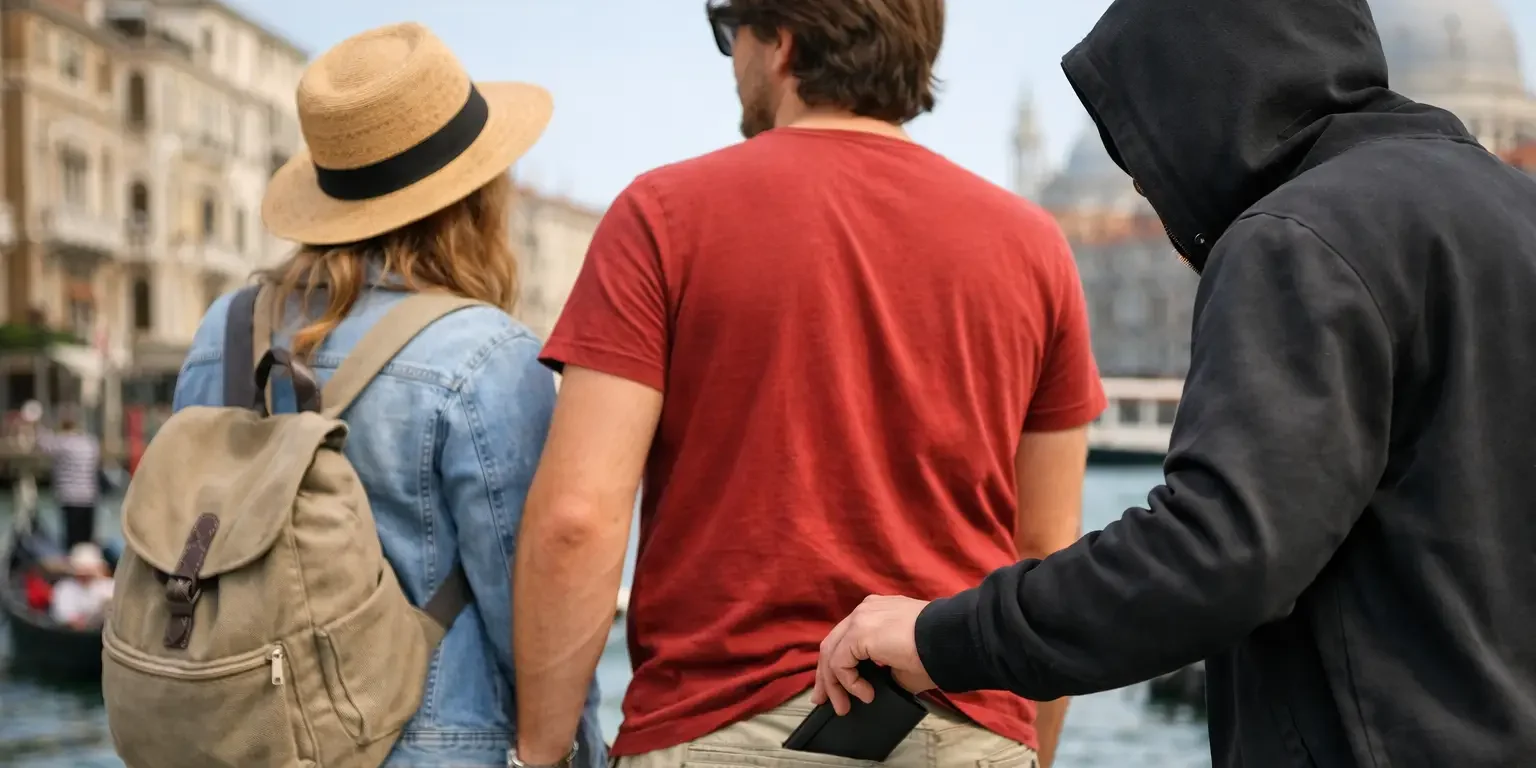
A crowded vaporetto arriving at Rialto, the bottleneck at the foot of a bridge, the moment everyone pauses to photograph St. Mark’s Basilica – these are the occasions when visitors most often wonder: are pickpockets dangerous in Venice? The reassuring answer is that Venice is generally a safe city for visitors, and pickpocketing is usually a crime of distraction and opportunity rather than confrontation. Still, a stolen phone, wallet, or passport can interrupt an otherwise exceptional stay, so a little quiet preparation goes a long way.
For guests who prefer to experience Venice at an unhurried pace, the city offers a practical advantage: much of its pleasure lies in wandering. Step away from the busiest routes for even a few minutes and the crowds soften, the calli become quieter, and Venice feels less like a checklist and more like a place to live.
Are pickpockets dangerous in Venice?
Pickpockets in Venice are rarely dangerous in the sense of being violent. Most thefts involve someone taking an unsecured item from an open tote, outer jacket pocket, backpack, or bag left unattended for a moment. The risk is inconvenience, expense, and the administrative burden of replacing documents, not typically physical harm.
That distinction should not lead to carelessness. Venice receives large numbers of visitors in a compact historic center, and certain passages naturally compress people together. A professional thief relies on this brief loss of awareness: a jostle at a ferry entrance, a question asked at the right moment, or the simple assumption that a zipped bag is safe when it is worn behind you.
The city’s atmosphere can make travelers lower their guard. It is tempting to leave a handbag beside a café chair while taking a photograph, tuck a phone into an open coat pocket, or rest a day bag on a luggage cart. In Venice, as in any major European destination, valuables deserve to remain on your person and under your control.
Where vigilance matters most
San Marco is one of the world’s great public spaces, but it is also an area where sightseeing crowds gather closely. The approaches to St. Mark’s Square, the Rialto Bridge, the route between Rialto and the station, and busy waterbus stops call for a little more attention than a quiet residential canal.
Arrival and departure deserve the same care. Santa Lucia Station, Piazzale Roma, airport connections, and packed vaporetti can bring luggage, tickets, directions, and payments into one hurried moment. Keep your bag closed before joining a queue, know where your documents are, and avoid displaying cash while you organize your plans.
Evening is not inherently unsafe, particularly around well-frequented central areas. However, a late dinner followed by a leisurely walk can mean lower attention after a glass of wine or two. Carry only what you need, keep your phone secure when consulting a map, and choose a bag that stays comfortably close to your body.
Small habits that make a meaningful difference
There is no need to turn a Venetian holiday into a security exercise. The best approach is discreet and routine: protect the essentials, then return your attention to the palazzi, lagoon light, and remarkable detail around every corner.
A crossbody bag with a secure closure is generally more practical than an open shoulder tote in crowded places. Wear it in front when boarding a vaporetto or moving through a dense crowd. If you prefer a backpack, remove it and hold it by your side in close quarters. This is courteous to fellow passengers as well as more secure.
Keep a primary payment card, most of your cash, and your passport separate from the items you use throughout the day. A slim cardholder in a zipped interior pocket is often easier to manage than a full wallet. Carrying a backup card separately can be helpful, but do not place every valuable in the same bag.
Your phone merits particular attention. It is both a camera and a travel companion, which means it comes out frequently. Return it to a secure pocket or bag immediately after taking a picture, checking directions, or showing a ticket. Do not leave it on a restaurant table, bar counter, or waterbus seat, even briefly.
For a polished, low-fuss approach, consider these four habits:
- Use a compact, closed bag and keep it in front of you in crowded areas.
- Carry only the cash and cards needed for the day.
- Keep passports and spare cards secured at your apartment whenever they are not required.
- Pause before leaving a café, shop, or waterbus to check phone, bag, and belongings.
These measures are not about expecting trouble. They simply remove the easy opportunities that pickpockets seek.
Be alert to distraction, not alarmed by it
Pickpocketing often depends on distraction. Someone may press close while boarding, spill something, ask for help, or create a moment of confusion in a crowd. Most people who approach you in Venice are simply fellow travelers, shop staff, or residents going about their day. There is no reason to be suspicious of ordinary interactions.
The sensible response is to stay composed. If someone moves unusually close, create a little space and place a hand on your bag. If a situation feels rushed or unclear, step aside before handling money or documents. Calm awareness is more useful than visible anxiety.
It is also worth separating pickpocketing from other minor visitor frustrations. A restaurant bill that feels higher than expected, an unsolicited offer of assistance, or merchandise of questionable quality may be annoying, but these are different issues. Review prices before ordering where they are displayed, use established vendors, and politely decline services you have not requested. Venice is best enjoyed with discernment, not distrust.
The advantage of a well-located stay
Location shapes how Venice feels. Staying centrally means you can visit major landmarks early in the morning or later in the evening, when day-trip crowds have thinned and the city has regained its softer rhythm. It also reduces the need to carry all your belongings across the city for a full day.
At Ca’ Sant’Angelo, the privacy of a refined apartment near San Marco offers a particularly useful comfort: a secure, elegant base where you can leave nonessential items behind, refresh between outings, and return to the city with only the essentials. That freedom encourages the kind of Venice visit that feels personal rather than hurried.
A thoughtfully planned day can be safer and more enjoyable than an overpacked one. Reserve time for a relaxed breakfast, one or two meaningful visits, a pause at your apartment, and an evening walk through quieter streets. You will naturally encounter fewer intense crowds than someone trying to cover every landmark between morning and sunset.
If something is stolen
Should you discover that a card, phone, or document is missing, act promptly but do not panic. First, retrace your immediate steps and ask at the last café, museum, shop, or waterbus stop where you used the item. Lost property and theft can look similar in the first few minutes.
If a payment card is gone, contact the card issuer at once and freeze or cancel it. For a lost passport, report the loss to local police and contact your embassy or consulate for replacement guidance. Save digital copies of your passport, travel insurance details, and card issuer contact numbers in a secure location separate from your physical documents. If you face an emergency or immediate threat, call 112.
Travel insurance can ease the financial side of a loss, but insurers commonly require a police report and proof of cancellation for stolen cards or documents. Keep notes of times, locations, and any relevant receipts while details are fresh.
Venice rewards travelers who stay present. Keep your valuables close when the city is busy, travel lightly when you can, and then let your attention return to what brought you here: a quiet canal after dusk, a table set for dinner, and the rare pleasure of feeling at home in the enchanted city.