

For travelers drawn to Venice by painting, architecture, and the quiet drama of its canals, the Academy Fine Arts in Venice offers an essential point of cultural reference. Yet its name can cause understandable confusion: the Accademia di Belle Arti di Venezia is a working institution for art education, while the celebrated Gallerie dell’Accademia is the museum most visitors mean when they speak of “the Accademia.” Understanding the distinction makes for a more rewarding day – and a more intimate encounter with the city’s artistic soul.
Venice does not present art as a separate attraction. It places it in church ceilings, worn stone thresholds, grand palaces, and luminous rooms overlooking the water. A visit centered on the Accademia invites a slower pace: one that leaves room for masterpieces, unplanned turns through Dorsoduro, and an unhurried return to San Marco.
The Academy Fine Arts in Venice and Its Enduring Legacy
Founded in 1750, the Accademia di Belle Arti di Venezia belongs to one of Europe’s great traditions of artistic training. It was established when Venice was already a formidable artistic center, shaped by generations of painters, sculptors, architects, printmakers, and designers. The institution helped formalize that heritage while continuing to foster new talent.
For many years, the academy and its picture collection occupied the former Scuola Grande di Santa Maria della Carità, a historic complex beside the Grand Canal. The academy later moved to the former Ospedale degli Incurabili in Dorsoduro, while the museum collection remained in the original buildings as the Gallerie dell’Accademia.
That history explains the shared name, but the experiences are distinct. The fine arts academy is an active place of study and creative practice. It may host exhibitions, lectures, or special events, though access depends on its academic calendar and program. The Gallerie dell’Accademia is the public museum, home to one of the world’s defining collections of Venetian painting. Travelers with a limited stay should regard the gallery as the priority, then look to the academy’s program if a current exhibition aligns with their interests.
Why the Gallerie dell’Accademia Matters
The Gallerie dell’Accademia is not simply a collection of famous names. It tells the story of how Venice saw itself: powerful, devotional, theatrical, cosmopolitan, and deeply responsive to light. Its rooms make clear why Venetian painting developed a language unlike that of Florence or Rome. Here, color and atmosphere often carry as much meaning as line and structure.
Among the artists represented are Giovanni Bellini, Giorgione, Titian, Tintoretto, Veronese, Carpaccio, and Canaletto. The gallery also holds Leonardo da Vinci’s celebrated Vitruvian Man, although this exceptionally fragile drawing is rarely displayed. It is wise not to plan a visit around seeing it. When it does appear, it is usually announced as part of a tightly managed temporary presentation.
The more lasting pleasure lies in the paintings that are regularly available to experience. Bellini’s altarpieces have a remarkable stillness. Titian’s portraits and religious works reveal a command of color that feels startlingly modern. Tintoretto brings movement, tension, and shadow, while Veronese turns sacred and civic scenes into radiant spectacles of silk, architecture, and ceremony.
Give the gallery more time than a quick checklist allows. A focused visit of 90 minutes can be satisfying for travelers with a full itinerary, but two hours or more permits pauses in front of the works that truly hold your attention. The museum can feel busy at peak times, particularly in the late morning. An earlier arrival or a later-afternoon visit often creates a more composed experience, though opening hours and admission procedures should always be confirmed before setting out.
A Graceful Art Walk Through Dorsoduro
The Accademia area rewards travelers who resist the urge to rush immediately to the next landmark. Begin near the Accademia Bridge, where the Grand Canal opens in one of Venice’s most memorable views. From there, the galleries and narrow calli of Dorsoduro lead toward quieter waters and a more residential rhythm.
After the Gallerie dell’Accademia, the Peggy Guggenheim Collection offers a sharp and fascinating contrast. Its modern works bring the 20th century into conversation with the Renaissance and Baroque legacy seen moments earlier. The two museums make an especially compelling pairing, but they can also create visual fatigue. If painting is your central interest, allow the Accademia to be the main event and choose only one additional cultural stop.
The Basilica di Santa Maria della Salute is another natural destination. Its monumental dome has anchored the entrance to the Grand Canal for centuries, and its interior provides a different kind of artistic encounter: painting experienced in its intended architectural and devotional setting. Continue toward the Zattere for open lagoon light, or pause in the smaller streets between the canal and Campo Santa Margherita, where Venice feels less staged and more lived in.
This is the appeal of placing art within a neighborhood rather than treating it as a separate appointment. Between museums, a simple coffee, a view across the water, or a few minutes in a quiet campo can reset the eye. Venice asks for this kind of attention.
Planning an Art-Focused Day From San Marco
A stay near San Marco makes the Accademia district easy to reach without sacrificing the pleasures of a central Venetian address. The walk across the Accademia Bridge is scenic and straightforward, though it can be less comfortable when carrying bags or navigating crowded periods. A water bus offers a more leisurely arrival and gives the Grand Canal its proper sense of occasion.
The right approach depends on your travel style. Travelers who enjoy walking can set out in the morning, cross toward Dorsoduro, and let the afternoon unfold through galleries and waterside neighborhoods before returning by boat. Those who prefer a more relaxed schedule may wish to reserve the museum for one focused visit, then leave time for an aperitivo or a quiet dinner closer to home.
It is worth avoiding the temptation to pack every major museum into one day. Venice’s cultural riches are intense, and the finest experiences often come from allowing one great collection to resonate. A thoughtfully paced itinerary leaves room for unexpected details: painted shutters, a craftsman’s window, the sound of a boat turning into a narrow canal.
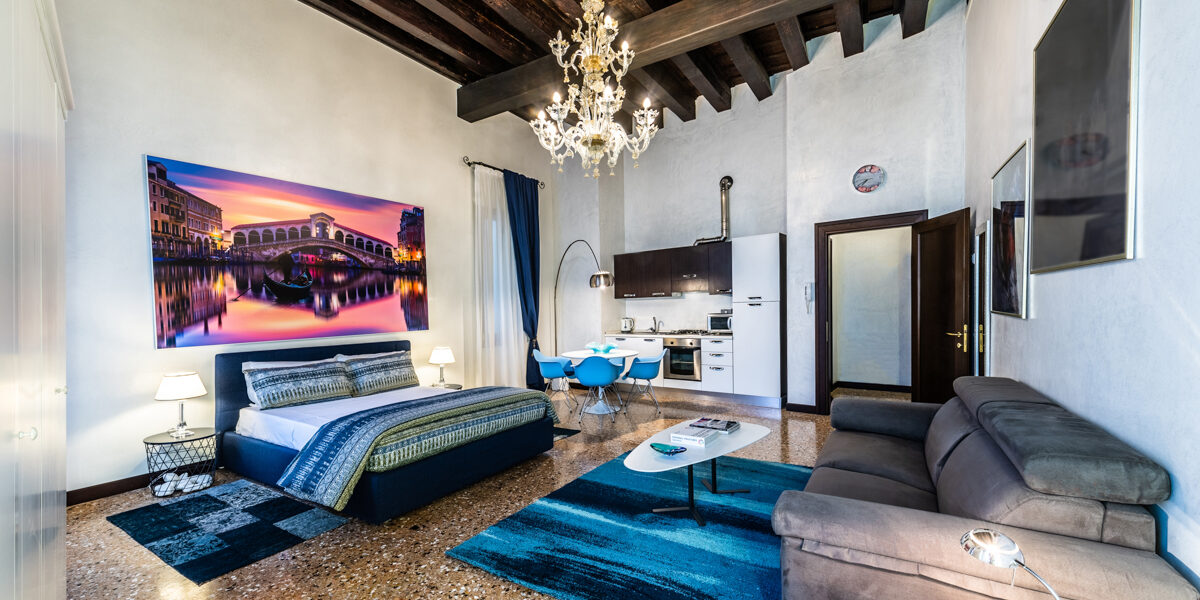
For guests seeking both independence and attentive support, a centrally positioned residence can make this balance easier. At Ca’ Sant’Angelo, the space and privacy of an elegant apartment offer a welcome return after a museum visit, while personalized local guidance can help shape a day around your interests rather than a rigid schedule.
Small Details That Improve the Visit
Dress for movement rather than formality. Venice’s bridges have steps, its streets are paved in uneven stone, and even a short cultural itinerary can involve more walking than expected. Comfortable shoes are a practical luxury.
Keep your museum plans flexible when possible. Weather, seasonal crowds, temporary exhibitions, and occasional changes to opening arrangements can influence the best time to visit. Reserving entry in advance is often sensible during popular travel periods, especially if the Accademia is a priority. Still, do not let a timed reservation turn the entire day into a race.
Photography rules can vary by room, exhibition, and loan agreement, so follow the museum’s instructions rather than assuming that every work may be photographed. More importantly, take at least a few moments without a screen. Venetian painting is made for sustained looking. Its surfaces, colors, and changing depths reveal themselves gradually.
The most memorable visit to the Academy Fine Arts in Venice may not be the one with the longest list of masterpieces. It may be the moment you step back outside, see the canal light differently, and realize that the city itself has become part of the gallery.