

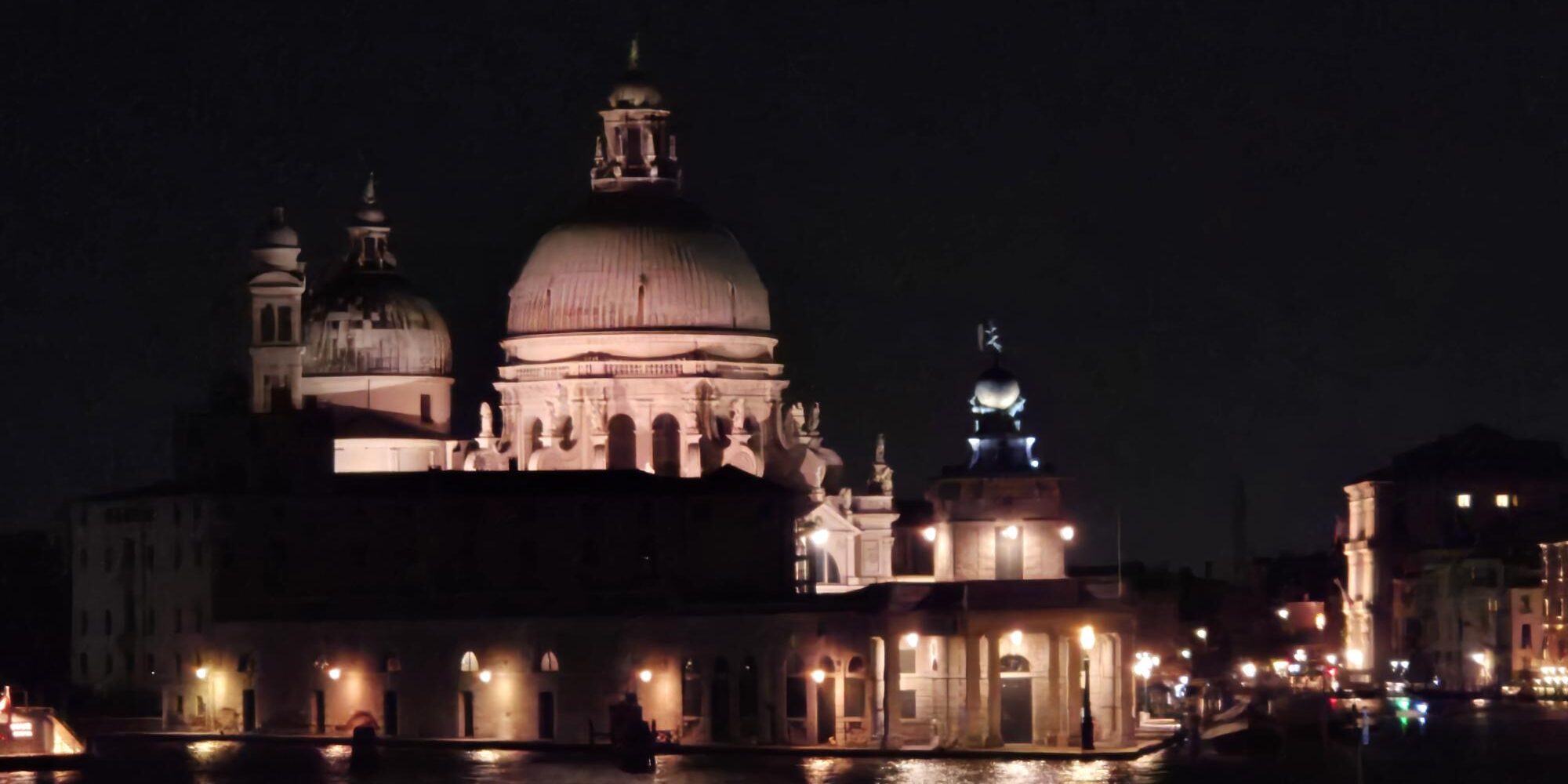
The pleasure of Palazzo Grassi and Punta della Dogana Venezia lies in the contrast: one is a grand 18th-century palazzo poised on the Grand Canal; the other, a former customs house at the water’s edge, faces the sweep of St. Mark’s Basin. Together, they offer one of Venice’s most compelling contemporary-art experiences, and a rewarding reason to slow down between the city’s celebrated churches, palaces, and lagoon views.
For travelers who prefer a Venice itinerary with room for both cultural depth and unhurried pleasures, these two venues can shape an exceptional day. Their exhibitions change, but their atmosphere does not: historic architecture, thoughtful curation, and an unmistakable sense of place.
Palazzo Grassi and Punta della Dogana Venezia: Two Distinct Settings
Both venues are associated with the Pinault Collection, yet they are not interchangeable. Palazzo Grassi is on the Grand Canal in the San Marco district, close to Campo Santo Stefano. Its pale façade and formal proportions announce a Venetian residence of considerable ambition. Inside, the building’s contemporary renovation creates a lucid setting for art while preserving the drama of its noble scale.
Punta della Dogana feels more elemental. The building occupies the triangular point where the Grand Canal meets the Giudecca Canal, directly across the water from the Doge’s Palace and the Bacino di San Marco. It was once Venice’s customs house, a fitting reminder of the city’s long commercial life. Its low, elongated form, restored for contemporary art, offers a different rhythm from Palazzo Grassi: more open, more industrial in character, and deeply connected to the shifting light of the lagoon.
The experience is as much architectural as it is artistic. At Palazzo Grassi, visitors move through rooms that retain the atmosphere of a patrician home. At Punta della Dogana, the exposed materials and broad galleries allow the art to meet Venice’s maritime history in a quieter, more spacious way.
What to Expect From the Exhibitions
The program is devoted to modern and contemporary art, often through major monographic exhibitions, thematic presentations, or works drawn from the Pinault Collection. Rather than promising a fixed roster of artists, it is best to approach each visit with curiosity. Exhibitions are intentionally temporary, and that is part of the appeal: a return visit to Venice can reveal an entirely different conversation within the same walls.
The work can be challenging, playful, political, intimate, or monumental. This is not a museum visit built around a single chronological story of Venetian art. It is an invitation to see contemporary ideas set against one of the world’s most historically layered cities.
That contrast is particularly memorable for first-time visitors. After frescoed ceilings and Renaissance altarpieces, a video installation or conceptual sculpture may feel unexpected. Yet Venice has always been a city of exchange, invention, and international influence. Contemporary art belongs here precisely because it continues that conversation.
If you are traveling with a companion who is less certain about contemporary art, allow time for the buildings themselves. The canal views near Palazzo Grassi and the panoramic setting around Punta della Dogana give the day a broader appeal. One does not need specialist knowledge to appreciate the setting, craftsmanship, and care behind the visit.
How to Plan a Refined Art Day in Venice
A relaxed schedule makes a significant difference. Begin at Palazzo Grassi in the late morning, when the streets around Campo Santo Stefano are still pleasantly calm. Arrive with enough time to take in the exhibition without treating it as a checklist. Depending on the scale of the show and your interest in the works, allow approximately 60 to 90 minutes.
Afterward, pause for lunch in the San Marco area or near Campo Santo Stefano before continuing toward Punta della Dogana. The walk is an experience in itself. Venice rewards wandering, but a map saved to your phone is useful when narrow calli branch unexpectedly or a familiar route is interrupted by a canal.
Punta della Dogana is well suited to the afternoon. The approach along the water is especially beautiful as the light softens, with the domes of Santa Maria della Salute nearby and boats crossing the basin. Give yourself another 60 to 90 minutes for the galleries, then stay a little longer outside. Few places offer such a graceful perspective on the lagoon, San Giorgio Maggiore, and the façade of the Doge’s Palace.
A vaporetto ride can be practical if you wish to reduce walking, though it depends on the pace you want for the day and the location of your accommodations. On a clear day, walking lets Venice unfold gradually. If the weather is wet, humid, or particularly busy, water transport may be the more comfortable choice.
Before setting out, confirm current opening days, exhibition dates, ticket options, and any entry procedures directly with the venues. Contemporary-art presentations sometimes involve timed access, special closures, or altered hours around exhibition installations. Advance planning is especially wise during Carnevale, Easter, summer weekends, and the Venice Biennale period.
The Best Order Depends on Your Venice Stay
For guests staying near San Marco, Palazzo Grassi is a natural first stop. It can be paired easily with a morning coffee near Campo Santo Stefano, followed by an elegant lunch before walking toward the waterfront. Punta della Dogana then provides a beautiful transition into the evening, whether you choose an aperitivo nearby or return across the canal for dinner.
The reverse order also works well for travelers coming from Dorsoduro. Start at Punta della Dogana when it opens, enjoy the Accademia or the Peggy Guggenheim Collection afterward if that suits your interests, and finish at Palazzo Grassi. This route creates a full day of art, although it can be more demanding. It is better for those who enjoy long museum visits than for travelers who want generous time for shopping, café stops, or spontaneous detours.
There is no need to rush both venues into one day. If Venice is part of a longer stay, visiting them separately can be more rewarding. Palazzo Grassi fits beautifully into a day around San Marco, while Punta della Dogana deserves to be savored alongside the Salute church and the views of the basin.
A Cultural Pause Near San Marco
Location changes the quality of a Venice visit. Staying in the historic center makes it possible to return home between engagements, rest after a gallery visit, change for dinner, or simply enjoy a quiet moment away from the day’s crowds. This freedom is particularly valuable in a city where every crossing, canal-side view, and hidden courtyard invites an unplanned pause.
Ca’ Sant’Angelo offers the discretion of a private, fully renovated apartment in the San Marco area, paired with the reassurance of attentive guest support. For travelers balancing museum hours with dinner reservations, water-taxi arrangements, and a wish to experience Venice at their own pace, that combination of independence and care is a genuine luxury.
A well-appointed apartment also makes the cultural day feel less scheduled. You might begin with an espresso at home, return after Palazzo Grassi for a light lunch, then leave again when the afternoon light draws you toward Punta della Dogana. Venice becomes less like a series of appointments and more like a place temporarily lived in.
Details That Make the Visit Better
Wear shoes suited to uneven paving and bridges. Even when the route appears short on a map, Venice’s surfaces and steps can make a day feel longer than expected. A light layer is also useful in every season, as gallery interiors, canal breezes, and changing weather can create surprising shifts in temperature.
Photography policies vary by exhibition, so follow the guidance provided in each gallery. Keep your phone quiet, give installations proper space, and take time with the interpretive texts when available. Contemporary art often reveals more when you resist the urge to move quickly from one object to the next.
Finally, leave room for the moments between the venues. Look up at the carved stone details near Campo Santo Stefano. Notice the working boats along the canals. At Punta della Dogana, watch the water traffic pass beneath the golden globe of the old customs house tower. These small observations are not an interruption to the art day. They are the setting that makes it distinctly Venetian.
When the galleries close and the basin begins to glow, choose the longer walk home if time allows. The most memorable Venice days are rarely those that fit the most into an itinerary, but those that leave space for the city to remain with you.